Advertisement






The Gulf conflict has disrupted global supply chains, pushed...
REITs have changed the way commercial real estate is owned a...
What really powers the cloud? Behind every Google search, A...
What really powers the cloud? Behind every Google search, A...
Luxury real estate is one of the most talked-about segments ...
India’s EV charging activity is increasingly split between two distinct patterns, with two-wheelers accounting for most charging sessions while four-wheelers consume a larger share of electricity. Bolt.Earth’s State of Charge: Exclusive EV Data Report 2026 found that two-wheelers made up 78.1% of charging sessions across six major metros in FY26-27 year-to-date, while four-wheelers accounted for 67.3% of energy consumed. The report also found faster growth in emerging Tier-2 and Tier-3 cities, a gap between session and energy peaks, and differences in how users engage with AC and DC fast charging.
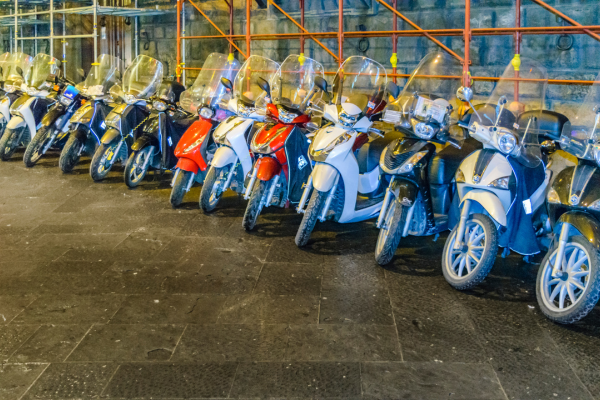
India’s EV charging ecosystem is developing with two-wheelers driving the number of charging visits, while four-wheelers account for most of the electricity consumed. Bolt.Earth’s State of Charge: Exclusive EV Data Report 2026, released around World EV Day, highlights how these different usage patterns are creating varied requirements for charging infrastructure.
The report found that two-wheelers accounted for 78.1% of charging sessions across six major metro markets in FY26-27 year-to-date, increasing from 71.6% in FY24-25. Four-wheelers, meanwhile, accounted for 16% of sessions but consumed 67.3% of the total energy, compared with 58.1% in FY24-25. The findings point to the need for charging networks that can support the high frequency of two-wheeler usage as well as the higher energy requirements of four-wheelers.
The data is based on Bolt.Earth’s internal network telemetry and operational information from Bengaluru, Hyderabad, Chennai, Delhi-NCR, Mumbai and Kochi, covering FY24-25, FY25-26 and FY26-27 year-to-date.
Nithin TS, Head of Marketing at Bolt.Earth, said the company’s charging data provides a different view of India’s EV adoption than sales figures. He explained that two-wheelers require wider and easily accessible charging networks because of their higher number of charging visits, while four-wheelers require greater energy capacity per visit and therefore faster, higher-capacity charging infrastructure at suitable locations.
Bengaluru remained the largest market in the report, recording 190,954 charging sessions and 526,990 kWh of energy consumption. Hyderabad and Kochi recorded the strongest growth among the major metros, while Delhi-NCR and Mumbai showed comparatively lower utilisation. Among emerging Tier-2 and Tier-3 markets, Vijayawada, Rajamahendravaram and Thiruvananthapuram recorded the fastest acceleration in demand, indicating that charging activity is expanding beyond India’s largest urban centres.
The report also found that charging activity and electricity demand follow different daily patterns. Charging sessions peaked at 6 PM, largely because of two-wheeler usage, while energy consumption reached its highest level at 9 PM. This three-hour difference could have implications for electricity tariffs, charging operations and grid planning as EV adoption increases.
Fast charging is also changing how users approach charging, although the report found that it does not necessarily translate into stronger long-term user loyalty. For four-wheelers, DC fast charging reduced the average session duration to 26.5 minutes, compared with 194.3 minutes for AC charging. However, AC users recorded a higher rate of returning within 90 days. This suggests that while DC charging can address immediate charging requirements, AC charging continues to support regular user engagement.
The report also estimated the environmental benefit of the charging activity tracked across the six metros. Based on delivered energy and vehicle-type data, the charging activity is estimated to have avoided around 473 tonnes of net CO emissions in FY25-26. Cumulative avoided emissions across all reporting periods were estimated at more than 1,100 tonnes.
Based on these findings, Bolt.Earth identified five areas that could shape the next phase of India’s EV charging transition: expanding beyond metro-focused networks to capture Tier-2 and Tier-3 demand; maintaining broad accessibility for two-wheelers while providing sufficient capacity for four-wheelers; planning around energy peaks rather than only session volumes; positioning fast charging as a convenience layer rather than assuming it will create user loyalty; and designing charging networks according to the needs of occasional and high-frequency users.
Nithin said that by 2030, charging networks would need to focus less on the total number of chargers and more on placing the appropriate charger in the right market, matching charging speeds with specific use cases, ensuring availability during peak demand and managing electricity consumption according to actual user behaviour.
Founded in 2017, Bolt.Earth operates an EV charging network with more than 100,000 chargers across over 2,100 cities. The company supports two-, three- and four-wheelers through standard and fast-charging options and operates an open network supported by its charging app and Charger Management System.

17th Nov, 2026

17th Nov, 2026


17th Nov, 2026




17th Nov, 2026


17th Nov, 2026
Advertisement









 Facebook
 Whatsapp

