Advertisement






The Gulf conflict has disrupted global supply chains, pushed...
REITs have changed the way commercial real estate is owned a...
What really powers the cloud? Behind every Google search, A...
What really powers the cloud? Behind every Google search, A...
Luxury real estate is one of the most talked-about segments ...
The Maharashtra government has created a 40,602-hectare digital land bank for compensatory afforestation to reduce delays in major infrastructure projects requiring forest clearances. The database includes 33,056 hectares of degraded forest land and 7,546 hectares of non-forest land across all districts, allowing authorities to quickly identify eligible plantation sites. The initiative is expected to accelerate approvals for highways, railways, bullet train corridors, ports and transmission projects while improving coordination between the Revenue and Forest departments through an online, district-wise land management system.
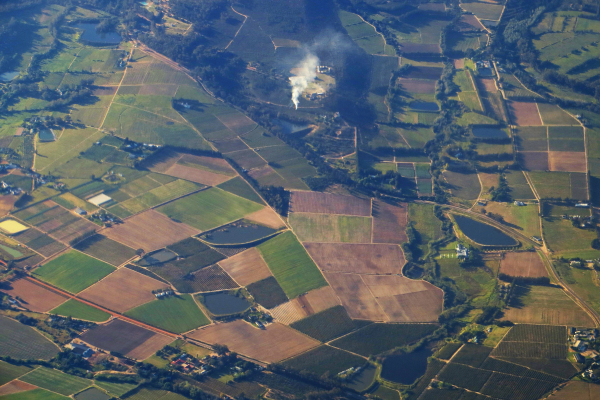
The Maharashtra government has launched a 40,602-hectare digital land bank for compensatory afforestation, a move aimed at reducing forest clearance delays that have often slowed the implementation of major infrastructure projects across the state.
The land bank combines 33,056 hectares of degraded forest land with 7,546 hectares of non-forest land, creating a ready database of eligible sites where compensatory plantations can be undertaken when forest land is diverted for development projects. The initiative has been jointly developed by the Revenue and Forest departments and is designed to make district-wise land information available through an online system.
Under existing regulations, infrastructure projects involving diversion of forest land must undertake compensatory afforestation by identifying equivalent non-forest land or, in eligible cases, double the area of degraded forest land. Officials said that locating suitable, dispute-free land has often been one of the biggest reasons for delays in project approvals and rising implementation costs.
According to the government, Maharashtra typically requires 2,000-3,000 hectares of degraded forest land and 1,000-2,000 hectares of non-forest land every year to meet compensatory afforestation requirements for projects such as national highways, state highways, coastal roads, tunnels, the Mumbai-Ahmedabad bullet train, dedicated freight corridors, railway expansion, ports and power transmission infrastructure.
The district-wise digital platform is expected to simplify this process by allowing authorities to identify available land before proposals are processed. The system will also update land records once parcels are allocated for afforestation, reducing duplication and improving transparency in land management.
The largest share of degraded forest land identified in the land bank is in the Nashik division, followed by Nagpur, Amravati, Pune, Marathwada and Konkan. For non-forest land, Marathwada accounts for the highest availability, followed by Nashik, Amravati, Pune, Konkan and Nagpur.
The initiative is expected to strengthen coordination between government departments by providing a single reference point for land required for compensatory plantation. Officials believe this will help accelerate environmental compliance without altering the requirement for statutory forest and environmental approvals.
17th Nov, 2026

17th Nov, 2026

17th Nov, 2026

16th Nov, 2026

16th Nov, 2026

16th Nov, 2026

16th Nov, 2026

16th Nov, 2026

15th Nov, 2026

Advertisement









 Facebook
 Whatsapp

