Advertisement






The Gulf conflict has disrupted global supply chains, pushed...
REITs have changed the way commercial real estate is owned a...
What really powers the cloud? Behind every Google search, A...
What really powers the cloud? Behind every Google search, A...
Luxury real estate is one of the most talked-about segments ...
India’s logistics sector is expanding rapidly, with industrial and warehousing demand across eight major cities reaching nearly 22 million square feet in the first half of 2026. However, Strategic Infrastructure & Logistics Leader Hemant Kejriwal believes the next opportunity lies in using this infrastructure more strategically. He sees potential in flexible warehousing, specialised third-party logistics services and better integration of supply-chain data. With disruptions to international shipping also affecting freight costs and routes, businesses are being pushed to build greater flexibility into their logistics networks. Kejriwal also believes SEZs and FTWZs remain underused opportunities for Indian businesses.
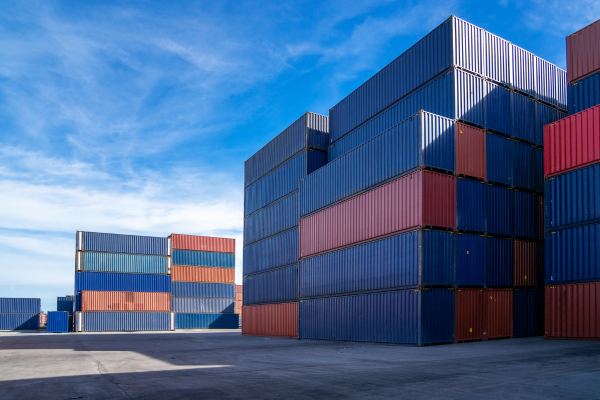
India’s logistics sector is expanding rapidly, but the next phase could depend less on adding warehouses and more on how efficiently businesses use the infrastructure being created. Strategic Infrastructure & Logistics Leader Hemant Kejriwal believes companies need to make their supply chains more connected and flexible to unlock their wider strategic potential.
Industrial and warehousing demand across India’s eight major cities reached nearly 22 million square feet in the first half of 2026, up 12% year-on-year, according to Colliers. Third-party logistics companies accounted for 30% of leasing demand, while around 25 million square feet of new Grade A supply was completed during the period.
Despite this growth, many Indian businesses continue to view logistics primarily as an operating expense rather than as a source of competitive advantage. Kejriwal, who has more than 25 years of experience across supply chains, retail, third-party logistics and international logistics, believes this difference is particularly visible between consumer-facing and B2B supply chains.
India’s e-commerce and quick-commerce sectors have developed rapidly, while B2B logistics has been slower to change. Kejriwal said logistics remains a cost function for most businesses, with relatively few companies using their supply chains strategically.
This could become more important as India looks to strengthen its position in global manufacturing and trade.
Businesses today have to deal with fluctuating demand, seasonal inventory, uncertain import cycles and changing distribution requirements. Traditional warehousing models, however, often involve fixed commitments. Kejriwal believes real estate players could address this gap by adding operational services to their warehouses and offering flexible capacity.
He compared the opportunity with the way co-working offices have addressed the need for flexible commercial space. Such warehousing models could allow businesses, both large and small, to increase or reduce capacity without taking on the full fixed cost of a dedicated facility.
The strong role of 3PL companies in warehousing demand also indicates that businesses are becoming more comfortable outsourcing infrastructure and logistics operations. Kejriwal also sees scope for more specialised 3PL operators that develop expertise in sectors such as pharmaceuticals, fashion and beverages instead of competing mainly on price. He believes deeper sector knowledge can help logistics providers differentiate themselves and create greater value for customers.
Technology is another area where the logistics sector is changing, although data fragmentation remains a challenge. At the government level, the Unified Logistics Interface Platform (ULIP) has connected 46 systems across 12 central ministries and departments through 142 APIs and more than 2,000 data fields. More than 260 applications have been developed using the platform.
Within enterprises, however, warehouses, transporters, manufacturers and distributors often operate on different Warehouse Management Systems and Transport Management Systems, with different data structures and limited interoperability.
Kejriwal believes this needs to be addressed before businesses can fully benefit from artificial intelligence. AI can support forecasting, visibility, route planning and decision-making, but its usefulness depends on the quality and availability of the data being supplied to it. Greater interoperability between different parts of the supply chain could therefore be as important as adopting new AI tools.
Recent disruptions to international shipping have further highlighted the need for flexibility. Tensions across West Asia have increased freight costs and complicated shipping routes for Indian businesses. India’s merchandise exports reached a record USD 44.24 billion in July 2026, even as exporters faced higher freight charges and logistics delays linked to the conflict.
These disruptions have made questions around inventory location, rerouting and alternative trade corridors more important for businesses. Kejriwal believes infrastructure such as Special Economic Zones and Free Trade Warehousing Zones could become more relevant in this environment because of the flexibility they offer.
India has also made progress in improving logistics costs. A DPIIT-NCAER assessment placed the country’s logistics cost at 7.97% of GDP, replacing the much higher estimates that were frequently cited in earlier years.
For Kejriwal, however, a world-class supply chain is not defined only by lower costs. Inventory needs to be accurate, safe and visible in real time, goods should move predictably and the rules governing their movement should be clear.
With India continuing to build its physical and digital logistics infrastructure, the next challenge will increasingly be within businesses themselves. How companies connect their systems, use their infrastructure and build flexibility into their supply chains could determine how much value they are able to derive from the wider logistics ecosystem.
Source PTI

17th Nov, 2026

17th Nov, 2026


17th Nov, 2026




17th Nov, 2026


17th Nov, 2026
Advertisement








 Facebook
 Whatsapp

