Advertisement






The Gulf conflict has disrupted global supply chains, pushed...
REITs have changed the way commercial real estate is owned a...
What really powers the cloud? Behind every Google search, A...
What really powers the cloud? Behind every Google search, A...
Luxury real estate is one of the most talked-about segments ...
India’s construction sector is increasingly being shaped by climate risks such as extreme heat, flooding, cyclones, coastal erosion and changing rainfall patterns. As cities expand and infrastructure needs grow, developers, architects and policymakers are being pushed to reconsider not only how buildings are designed, but also where new development should take place. From heat-resilient buildings and flood-sensitive planning to low-carbon materials and the retrofitting of existing structures, climate adaptation is gradually becoming an important consideration in India’s built environment.
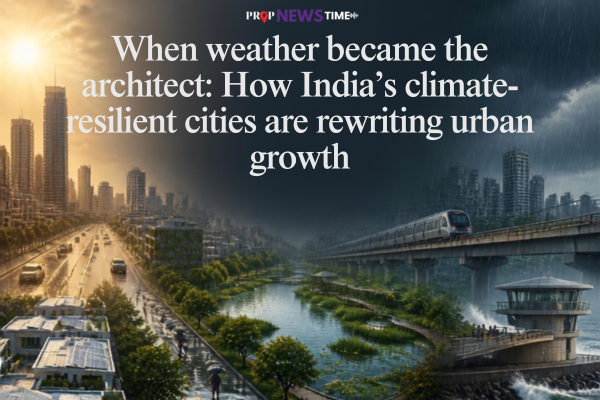
India’s rapid urbanisation is creating demand for large-scale housing, commercial space and infrastructure, but climate-related risks are making conventional approaches to development increasingly difficult. The challenge is no longer limited to protecting buildings after extreme weather events; it is also about incorporating climate risks into land-use decisions, construction standards, materials, infrastructure planning and redevelopment. Several emerging trends indicate how climate considerations could influence the next phase of India’s construction growth.
Heat-resilient design
Rising temperatures are making passive cooling and heat-sensitive building design increasingly important in Indian cities. Urban areas can experience significantly higher temperatures than surrounding regions because of dense construction, paved surfaces and limited vegetation. Heat Action Plans have been introduced in several cities, but research indicates that many measures remain focused on short-term responses rather than changes to the built environment. This is increasing interest in designs that reduce dependence on mechanical cooling. Building orientation, external shading, natural ventilation, thermal-mass materials, reflective surfaces, green roofs and better roof insulation can help reduce indoor heat exposure. Traditional Indian architectural approaches, including courtyards, shaded verandahs and ventilation corridors, are also being reconsidered as potential components of climate-responsive design.
Flood risk
Flood risk is increasingly influencing decisions about where construction should take place, particularly in rapidly urbanising cities. Development around wetlands, lakes, drainage channels and floodplains can reduce natural water-storage capacity and increase the consequences of intense rainfall. As a result, urban planning is expected to place greater emphasis on flood-risk mapping, drainage capacity and protection of natural water systems before approving new developments. The experience of cities such as Bengaluru and Chennai has highlighted the consequences of building in areas vulnerable to waterlogging and flooding. For developers, this could mean greater scrutiny of site selection, basement construction, drainage systems and ground-floor design. In high-risk locations, restrictions on development or requirements for additional flood mitigation measures could increasingly become part of planning approvals.
Coastal construction
India's long coastline makes sea-level rise, coastal erosion and extreme weather important considerations for urban and infrastructure development. Cities such as Mumbai, Chennai and Kochi have large concentrations of housing, commercial activity and transport infrastructure close to the coast, increasing their exposure to climate-related hazards. Future coastal projects may therefore require more detailed assessments of long-term climate risks during planning and approval. Roads, ports, reclamation projects and waterfront developments could need stronger protection against flooding, erosion and extreme weather. Climate-risk screening at the infrastructure approval stage could also become more important as governments seek to avoid locking large investments into vulnerable locations.
Low-carbon materials
Climate considerations are also influencing the materials used in construction. Cement and steel are among the major sources of embodied carbon in the built environment, encouraging architects, developers and manufacturers to explore lower-carbon alternatives and more efficient construction methods. Green concrete, recycled materials, locally sourced products and other low-embodied-carbon solutions are gaining attention as the industry looks to reduce the environmental impact of buildings. The shift is particularly relevant in India's rapidly expanding urban markets, where large volumes of residential, commercial and infrastructure construction are expected. Over time, sustainability requirements and changing buyer preferences could encourage wider adoption of such materials beyond premium developments.
Retrofitting existing buildings
Climate adaptation will not depend entirely on new construction. A substantial part of India's future urban environment will consist of buildings that already exist, making retrofitting an important component of resilience planning. Existing homes, offices, public buildings and housing complexes may require improvements to withstand heat, flooding and other climate stresses. Possible measures include improved insulation, ventilation, shading, drainage, waterproofing and structural strengthening. In flood-prone areas, modifications to ground floors and electrical systems could help reduce damage, while older buildings in heat-stressed cities could benefit from better roofs and passive cooling measures. This creates a potential new area of activity for architects, contractors and building-material companies alongside conventional new development.
Governance and enforcement
The effectiveness of climate-resilient construction will ultimately depend on how effectively planning rules and building standards are implemented. Many local authorities face constraints in terms of funding, technical capacity, trained personnel and access to detailed climate-risk data. These limitations can make it difficult to enforce zoning regulations or incorporate climate information into development approvals. A stronger regulatory approach could eventually make climate resilience a requirement rather than an optional feature. Building approvals may increasingly consider flood exposure, heat vulnerability, drainage capacity and other location-specific risks, while infrastructure funding could be linked to resilience standards. For developers, this would make early-stage climate assessment an integral part of project planning rather than a measure introduced after construction begins.
Climate change is therefore likely to influence India's construction sector at both the site-selection and building-design levels. The next generation of development will need to account for not only land availability, connectivity and market demand, but also exposure to heat, flooding and other environmental risks. As climate-resilient planning becomes more embedded in regulations and investment decisions, developers and cities that incorporate these considerations early could be better positioned to manage long-term risks.
Sources PLOS Climate, ICLEI South Asia, MDPI, Observer Research Foundation, Invest India, Saint-Gobain, Arup, IIHS, FOAID Blogs

17th Nov, 2026

17th Nov, 2026


17th Nov, 2026




17th Nov, 2026


17th Nov, 2026
Advertisement








 Facebook
 Whatsapp

