Advertisement






The Gulf conflict has disrupted global supply chains, pushed...
REITs have changed the way commercial real estate is owned a...
What really powers the cloud? Behind every Google search, A...
What really powers the cloud? Behind every Google search, A...
Luxury real estate is one of the most talked-about segments ...
India's ageing population is set to become an increasingly important force in the country's housing market. The population aged 60 and above is projected to rise from around 162 million in 2025 to 346 million by 2050, according to JLL, creating demand for housing that goes beyond conventional residential formats. Senior living communities, accessible homes, healthcare-linked developments, technology-enabled housing and integrated townships could gain prominence as family structures and living preferences evolve. With organised senior living still at an early stage, the demographic shift could open a significant new segment for developers, investors and operators.
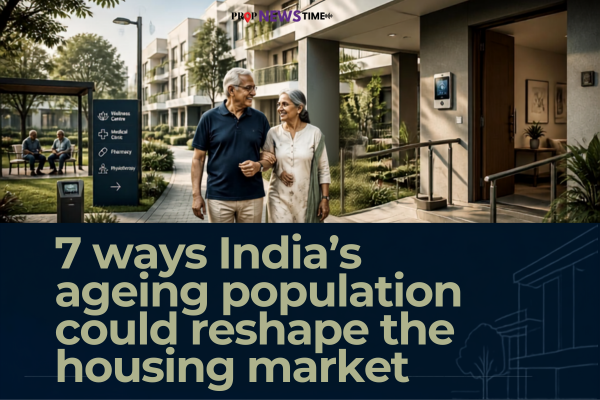
India is often described through the lens of its young population, but another demographic shift is steadily gaining importance: the rapid growth of its elderly population. As life expectancy rises, fertility rates decline and family structures change, the number of Indians aged 60 and above is expected to increase significantly over the coming decades. UNFPA estimates that people aged 60 and above could account for around 20% of India's population by 2050, compared with roughly 10% in 2021. JLL's more recent senior living research puts the projected senior population at 346 million by 2050, up from 162.2 million in 2025.
The shift has implications well beyond healthcare and social security. Housing is likely to be one of the sectors most directly affected, as older households require different levels of accessibility, services, community infrastructure and care. Here are seven ways India's ageing population could reshape the housing market.
1. Senior living could move into the mainstream
Senior living in India has traditionally remained a niche segment, but demographic growth could turn it into a more established residential asset class. JLL and the Association of Senior Living India estimated that the senior living market could grow to US$7.7 billion by 2030, while the target market could expand from 1.57 million households in 2024 to 2.27 million by 2030. Organised supply stood at more than 20,000 units, highlighting the gap between existing inventory and potential demand.
The opportunity is not limited to traditional retirement homes. Independent living, assisted living, memory care and continuing-care communities can serve different stages of ageing, creating a broader residential ecosystem around the senior population. For developers, this could mean treating senior living as a specialised housing category rather than simply adapting conventional apartments for older residents.
2. Homes could become more accessible by design
An ageing population is likely to influence the physical design of mainstream housing as well as dedicated senior communities. Features such as step-free entrances, wider doorways, lifts, accessible bathrooms, anti-skid flooring, better lighting and emergency response systems can make homes easier and safer to use as residents grow older.
JLL's research on India's senior living market highlights the importance of designing environments around independence and ease of living rather than focusing only on care. This could gradually influence the wider residential market. Developers may increasingly incorporate universal-design principles into projects intended for multiple generations, making homes suitable for residents at different stages of life.
3. Healthcare could become part of the housing proposition
The relationship between housing and healthcare is likely to become closer as India's elderly population grows. Senior-focused developments can integrate clinics, nursing support, emergency response, physiotherapy, wellness facilities and partnerships with nearby hospitals. The model shifts housing from being simply a place to live towards a broader ecosystem supporting residents' changing needs.
JLL's research estimates that India's senior living demand is being driven partly by longer life expectancy, changing family structures and the growing need for organised care solutions. This could encourage new partnerships between real estate developers, healthcare providers and senior-care operators. Over time, healthcare-linked residential projects could become a more recognisable category within India's housing market.
4. Integrated communities could replace isolated senior housing
The next generation of senior living may not necessarily be built as standalone retirement enclaves. JLL has highlighted the potential for integrated communities where senior housing forms part of larger townships containing retail, healthcare, recreation and other residential formats. Such developments can allow older residents to remain connected to broader communities rather than being physically separated from other age groups.
This approach also creates a stronger real estate ecosystem. Retail, hospitality, healthcare and residential uses can support each other, while shared amenities can encourage interaction between generations. For developers, integrated communities could therefore offer a way to address ageing without creating developments that feel exclusively designed around dependency or retirement.
5. Technology could enable more people to age in place
Not every older person will want to move into a dedicated senior living community. A large part of the future demand could therefore come from people who want to remain in their existing homes while receiving additional support.
Technology can make this model more viable. Smart-home systems, emergency alerts, remote health monitoring, fall detection, telemedicine and digital platforms connecting residents with family members can improve safety and independence.
JLL's research on AgeTech identifies technology as an important component of the emerging senior housing ecosystem, particularly in enabling ageing in place and maintaining family connectivity. This could create a new layer of demand for residential technology and home modification services, even among households that never move into purpose-built senior housing.
6. Location preferences could shift towards healthcare and everyday convenience
As residents age, proximity to hospitals may become more important, but healthcare is unlikely to be the only location consideration. Walkability, access to public transport, neighbourhood retail, parks, cultural spaces and community facilities can become equally important for maintaining independence and social interaction.
JLL's research indicates that southern India currently accounts for around 60% of India's senior living market, reflecting demographic trends as well as factors such as the presence of NRI families and established urban ecosystems. This could influence future development patterns, with senior-oriented housing potentially clustering around cities and neighbourhoods that combine healthcare access with strong social and lifestyle infrastructure.
7. Multigenerational housing could gain importance
Ageing does not necessarily mean a complete shift towards independent senior communities. India's housing market could simultaneously see greater demand for homes that allow multiple generations to live comfortably together.
Larger homes with flexible layouts, separate bedrooms or living zones, accessibility features and shared amenities can accommodate ageing parents while preserving privacy for younger family members. UNFPA's research highlights the importance of changing family structures and the increasing need to plan for an ageing population.
This could influence the design of mainstream residential projects. Instead of treating the typical family as a young couple with children, developers may increasingly need to consider households that include elderly parents or relatives.
India's ageing population could gradually reshape housing from both the demand and supply sides. The growth of senior living may create a new specialised asset class, while accessibility, healthcare, technology and multigenerational design could begin influencing mainstream residential development. The opportunity is particularly significant because organised senior living remains relatively underpenetrated. JLL estimates that senior living penetration was only around 1.3% in 2024, compared with more than 6% in mature markets such as the US and Australia.
The larger shift, however, may be cultural as much as demographic. As Indians live longer and family structures continue to evolve, housing will increasingly need to accommodate different stages of life. The future residential market could therefore move towards homes and communities designed not just around where people live, but how their needs change as they age.
Sources- JLL India, UNFPA India, Association of Senior Living India (ASLI), International Institute for Population Sciences (IIPS), Economic Times, Times of India and other industry reports

17th Nov, 2026

17th Nov, 2026


17th Nov, 2026




17th Nov, 2026


17th Nov, 2026
Advertisement








 Facebook
 Whatsapp

