Advertisement






The Gulf conflict has disrupted global supply chains, pushed...
REITs have changed the way commercial real estate is owned a...
What really powers the cloud? Behind every Google search, A...
What really powers the cloud? Behind every Google search, A...
Luxury real estate is one of the most talked-about segments ...
India’s Dedicated Freight Corridors (DFCs) are expanding the capacity and efficiency of rail-based freight movement by providing dedicated routes between major industrial centres, logistics hubs and ports. The existing 2,843-km network consists of the Eastern Dedicated Freight Corridor (EDFC) and Western Dedicated Freight Corridor (WDFC), both of which are now fully commissioned. The corridors allow faster freight movement, higher axle loads and double-stack container operations, while also easing congestion on conventional railway routes. A new 2,052-km Dankuni-Surat corridor announced in the Union Budget 2026 is set to further expand the dedicated freight network.
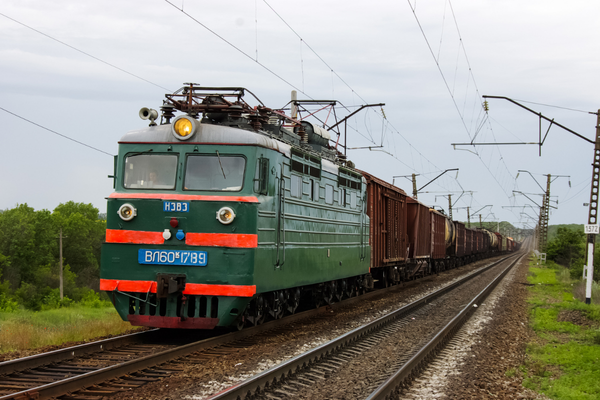
India’s dedicated rail freight network has expanded into a key infrastructure link for moving goods between major production centres, industrial regions, logistics hubs and ports. The operationalisation of the Dedicated Freight Corridors (DFCs) has created separate high-capacity routes for freight trains, allowing cargo to move more efficiently while reducing pressure on the conventional railway network.
The existing DFC network covers around 2,843 km through two corridors — the 1,337-km Eastern Dedicated Freight Corridor (EDFC) and the 1,506-km Western Dedicated Freight Corridor (WDFC). The EDFC runs from New Sahnewal in Punjab through Haryana and Uttar Pradesh to New Sonnagar in Bihar. The WDFC starts at New Dadri in Uttar Pradesh and passes through Haryana, Rajasthan and Gujarat before reaching New JNPT in Maharashtra.
Both corridors have now been fully completed and commissioned. The network is currently handling an average of more than 443 freight trains a day, with freight volumes continuing to increase across container, coal and bulk cargo. The higher train speeds and quicker turnaround times have also improved the reliability of freight movement.
One of the major advantages of the DFC network is its ability to handle longer and heavier freight trains. The infrastructure supports higher axle loads and allows double-stack container trains, particularly on the Western DFC. This enables more cargo to be transported in a single train movement and improves the utilisation of rail infrastructure.
According to the Ministry of Railways, DFCs have been designed for speeds of up to 100 kmph, train loads of up to 13,000 tonnes and an enhanced axle load of 25 tonnes. The corridors also use automatic signalling and other systems aimed at improving freight throughput.
The direct rail connection to major ports is particularly relevant for containerised cargo. The Western DFC connects the northern and western industrial regions with JNPT in Maharashtra, providing a dedicated route for the movement of goods towards one of the country’s important container ports.
The shift of freight trains to dedicated corridors is also freeing up capacity on existing railway routes. With fewer freight trains using conventional tracks, Indian Railways can use the additional capacity for passenger and other services.
The DFC network has therefore been designed not only to improve freight movement but also to address congestion on busy railway routes. Faster transit, higher carrying capacity and fewer conflicts between freight and passenger services can help improve the overall utilisation of the railway network.
The completed corridors are also contributing to lower logistics costs and more efficient supply chains by improving transit times and reducing delays. This is particularly relevant for industries where transportation time and reliability directly affect inventory and distribution costs.
The Union Budget 2026 announced a new 2,052-km Dedicated Freight Corridor between Dankuni in West Bengal and Surat in Gujarat. Unlike the original description in the supplied material, the proposed corridor is officially identified as the Dankuni-Surat DFC. It is planned to pass through West Bengal, Odisha, Chhattisgarh, Madhya Pradesh, Maharashtra and Gujarat, further extending dedicated freight connectivity across eastern and western India.
The project is currently at the planning stage, with the preparation and updation of its Detailed Project Report (DPR) taken up by the Dedicated Freight Corridor Corporation of India. The proposed corridor is expected to connect with the existing freight network and strengthen east-west cargo movement.
The project has also moved into preliminary land-related processes in parts of Gujarat. Railway notifications issued in the past month have authorised competent authorities in districts including Surat, Tapi and Navsari for the new freight corridor project.
A parliamentary committee has also called for timely execution of the Dankuni-Surat corridor, highlighting the need for timely completion and cost control.
The development of DFCs forms part of a broader effort to shift a larger share of long-distance freight movement towards rail and improve the efficiency of the country’s logistics system. The dedicated routes provide freight operators with infrastructure designed specifically for heavier and longer trains, while the diversion of cargo traffic from conventional routes creates additional railway capacity.
The completed EDFC and WDFC now provide a dedicated east-west and north-west freight backbone, linking manufacturing and industrial centres with major consumption and export markets. The planned Dankuni-Surat corridor could further widen this network by creating another major east-west freight route.
Source PTI

17th Nov, 2026

17th Nov, 2026


17th Nov, 2026




17th Nov, 2026


17th Nov, 2026
Advertisement








 Facebook
 Whatsapp

