Advertisement






The Gulf conflict has disrupted global supply chains, pushed...
REITs have changed the way commercial real estate is owned a...
What really powers the cloud? Behind every Google search, A...
What really powers the cloud? Behind every Google search, A...
Luxury real estate is one of the most talked-about segments ...
Ghaziabad has more than 150 buildings classified as unsafe or dangerous, highlighting a widening structural-safety challenge in the NCR city. The number has risen sharply from 26 buildings identified in 2018 and 102 in 2020. The issue has gained renewed attention after the recent Satya Niketan building collapse in Delhi. Although Uttar Pradesh introduced the Urban Redevelopment Policy-2026 to facilitate reconstruction of ageing and unsafe properties, redevelopment remains limited on the ground. Tulsi Niketan has received approval for redevelopment, while several other unsafe occupied buildings continue to await action.
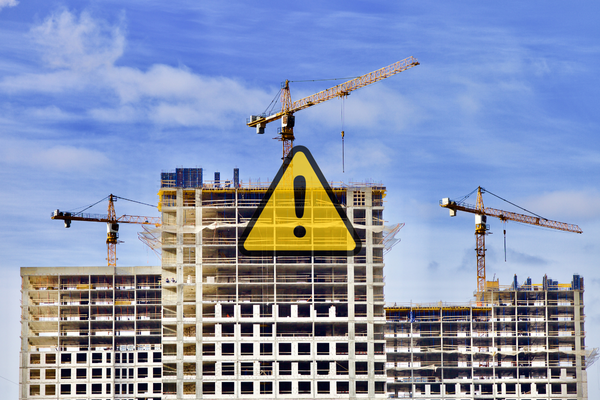
Ghaziabad’s list of unsafe buildings has crossed 150, highlighting the condition of ageing residential structures. The issue has become more urgent after the recent collapse of a building in Delhi’s Satya Niketan, highlighting the risks faced by occupants of structurally vulnerable properties across the National Capital Region. The number of buildings classified as unsafe or dangerous in Ghaziabad has increased substantially over the past decade.
The latest figure represents a steep rise from 26 unsafe buildings identified in a 2018 survey and 102 in 2020. The rise points to structural deterioration and prolonged maintenance challenges. Several properties continue to be occupied despite being declared dangerous, making rehabilitation and relocation difficult.
Tulsi Niketan remains one of the most prominent examples. Developed by the Ghaziabad Development Authority (GDA) during the 1990s, the 7.8-hectare complex comprises 220 LIG flats, 2,004 EWS flats and 60 shops. The colony has deteriorated over the years and has been the site of accidents, including a fatal balcony collapse last year. Residents have also raised concerns over roof and structural failures and the absence of sustained repair work.
The GDA has approved redevelopment of Tulsi Niketan under Uttar Pradesh’s Urban Redevelopment Policy-2026. The authority has said work is progressing, although implementation remains closely watched by residents. Earlier efforts had faced resistance and disagreements between residents and authorities, including concerns over rehabilitation and ownership documentation.
The state policy, implemented in February 2026, provides a framework for redevelopment of public and private housing projects that are at least 25 years old or have been found unsafe through structural audits. Eligible projects generally require a minimum land parcel of 1,500 square metres. Redevelopment can be undertaken directly by government agencies, through a public-private partnership, or by housing societies and apartment owners’ associations, with two-thirds resident consent required in the latter cases.
The policy also provides incentives intended to make redevelopment financially viable, including a 50% rebate on development charges and additional floor area ratio over the base entitlement without charge, subject to applicable conditions. Projects are generally expected to be completed within three years, with a possible extension of up to two years in special circumstances. Transit accommodation or rent must also be arranged for residents during construction.
However, the policy’s broader impact in Ghaziabad remains uncertain. At least three inhabited towers in Vaishali - Alaknanda, Mandakini and Saryu - have also been reported as dangerous, while other ageing structures continue to require intervention and safety assessments. The immediate challenge is therefore not simply identifying unsafe buildings, but creating a workable mechanism for structural audits, evacuation, temporary housing, resident consent, financing and reconstruction.
For Ghaziabad, the growing inventory of unsafe buildings shows that declaring a structure dangerous is only the first step. The effectiveness of the redevelopment policy will depend on how quickly authorities can convert approvals into construction, provide rehabilitation and protect residents through the transition.
16th Nov, 2026


16th Nov, 2026

12th Nov, 2026

11th Nov, 2026

11th Nov, 2026

11th Nov, 2026
10th Nov, 2026

5th Nov, 2026

Advertisement








 Facebook
 Whatsapp

