Advertisement






The Gulf conflict has disrupted global supply chains, pushed...
REITs have changed the way commercial real estate is owned a...
What really powers the cloud? Behind every Google search, A...
What really powers the cloud? Behind every Google search, A...
Luxury real estate is one of the most talked-about segments ...
Gurugram’s latest spell of heavy rain has once again exposed weaknesses in the city’s road and drainage infrastructure, with waterlogging causing prolonged traffic congestion and damaged roads becoming hazardous for commuters. About 36 mm of rain fell in one hour on September 5, slowing traffic across stretches including Rajiv Chowk, Sohna Road, Golf Course Extension Road, Udyog Vihar and Sector 14. In Sector 14, deep potholes and flooding on internal roads have compounded commuter difficulties. The Municipal Corporation of Gurugram has awarded resurfacing work, but utility upgrades planned alongside the repairs are delaying the final road works.
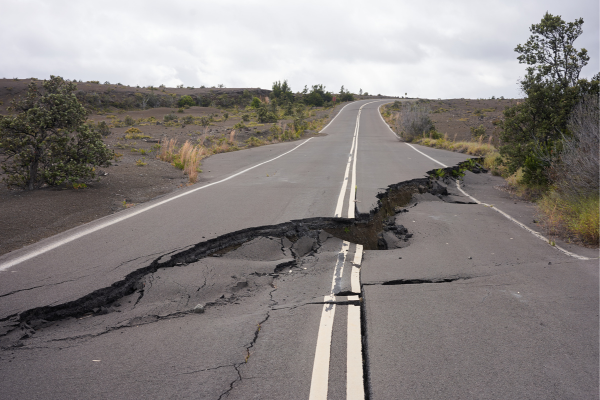
Gurugram’s recurring monsoon disruptions have again highlighted the vulnerability of its road and drainage network, with a short spell of heavy rain leading to hours of congestion across important corridors. Around 36 mm of rainfall was recorded in one hour on September 5, after which traffic slowed considerably between Sarhaul Border and Rajiv Chowk and along several major routes. Rajiv Chowk, Sohna Road, Golf Course Extension Road, Udyog Vihar and roads around Sector 14 were among the affected areas.
The impact was particularly pronounced for two- and three-wheeler users, as water accumulated along roadsides and in existing potholes. Sections of Udyog Vihar Phase 3 and Old Delhi-Gurugram Road became difficult to navigate, increasing the risk of accidents. Traffic police deployed personnel at vulnerable locations and major intersections, while municipal and district administration teams used suction pumps to remove accumulated water. Authorities also issued advisories asking residents to avoid waterlogged roads, underpasses and low-lying areas.
Sector 14 illustrates how drainage problems are being compounded by the poor condition of internal roads. Residents have reported deep potholes and persistent waterlogging near the sector’s entry points, with flooding making the road surface difficult to assess and increasing the risk to motorists and pedestrians. The road near the main entrance was constructed around three years ago, according to residents, but has since deteriorated. Complaints were also submitted through the CM Window, while minor patchwork carried out around three months ago was described as a temporary solution.
The Municipal Corporation of Gurugram has awarded a contract for resurfacing the sector’s internal 18-metre roads. However, the work is linked to planned utility improvements, including the laying of a new water pipeline and drainage infrastructure. The civic body has said these works will begin soon and that resurfacing is targeted for completion by November. Residents, meanwhile, have sought temporary repairs at severely damaged stretches near Gate 5 and the Lady Fatima School road at Gate 3 so that the roads remain usable until the larger works are completed.
The wider pattern suggests that Gurugram’s monsoon problem is not limited to rainfall intensity. Repeated waterlogging, damaged carriageways and blocked or inadequate drainage can combine to amplify disruption, particularly on heavily used urban roads. Recent concerns raised by residents across Sector 14 have included pothole-ridden roads, poor sanitation and inadequate rainwater management, indicating that several civic infrastructure issues overlap during the monsoon.
For a rapidly urbanising city with extensive residential, commercial and employment clusters, the recurring disruption raises questions about the coordination of road construction, drainage, utility installation and maintenance. Sector 14’s planned resurfacing alongside water and drainage works offers a route towards a more durable solution, but the immediate requirement remains to keep damaged stretches motorable while larger infrastructure works are underway.
The latest rain-related congestion therefore serves as another reminder that Gurugram’s mobility challenges cannot be addressed through emergency pumping and temporary pothole repairs alone. Long-term improvements will require better integration of drainage capacity, road construction and utility planning, particularly in established neighbourhoods where deteriorating internal roads increasingly affect everyday mobility.


17th Nov, 2026

16th Nov, 2026



16th Nov, 2026



15th Nov, 2026

Advertisement








 Facebook
 Whatsapp

