Advertisement






The Gulf conflict has disrupted global supply chains, pushed...
REITs have changed the way commercial real estate is owned a...
What really powers the cloud? Behind every Google search, A...
What really powers the cloud? Behind every Google search, A...
Luxury real estate is one of the most talked-about segments ...
CREDAI-Gujarat has sought clarity from the government on the applicability of Goods and Services Tax (GST) to purchased Floor Space Index (FSI), citing concerns over ambiguity in the tax treatment and its impact on real estate project costs. The developers' body has called for uniform guidelines and a clear interpretation of GST provisions governing FSI transactions. FSI determines the permissible construction area on a plot and is a key component in project planning and feasibility. The industry has raised concerns that uncertainty over the tax treatment could complicate cost estimation and project planning, while any additional tax burden could ultimately affect property prices
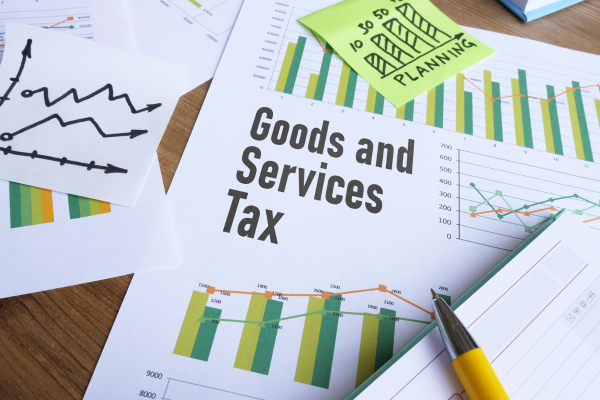
CREDAI-Gujarat has sought clarity from the government on the applicability of Goods and Services Tax (GST) on the purchase of Floor Space Index (FSI), raising concerns over ambiguity in the tax treatment and its potential impact on real estate project costs.
The developers' body has called for uniform guidelines and a clearer interpretation of GST provisions governing FSI transactions. According to the organisation, uncertainty around the tax treatment could create complications for developers while estimating project costs and planning developments.
FSI, also known as floor area ratio (FAR), determines the maximum floor area that can be developed on a plot of land. Developers can purchase additional or paid FSI from local authorities to increase the permissible construction area, making its cost an important component of project feasibility.
The issue is particularly relevant to projects where developers factor purchased FSI into construction and development costs. CREDAI-Gujarat has sought greater clarity so that developers can determine their tax liabilities and incorporate them accurately into project financial planning.
The industry has previously raised concerns about the possible impact of GST on FSI charges. CREDAI had argued that an 18% GST levy on FSI and additional FSI charges could increase project costs and, in turn, affect housing affordability and demand.
GST provisions have historically provided specific treatment for the transfer of development rights and FSI in residential real estate projects, including provisions concerning GST liability on development rights or FSI attributable to unsold residential apartments at the completion certificate or first-occupation stage.
CREDAI-Gujarat's latest demand centres on establishing a clear and consistent interpretation for FSI purchases, which the industry says would provide greater certainty in project planning, cost estimation and compliance.
For developers, clarity on the tax treatment is significant because FSI costs directly influence the amount of construction that can be undertaken on a site and therefore affect overall project economics. Any additional tax liability could also have implications for development costs and property pricing.


14th Nov, 2026

14th Nov, 2026

14th Nov, 2026

13th Nov, 2026


13th Nov, 2026


13th Nov, 2026
Advertisement








 Facebook
 Whatsapp

