Advertisement






The Gulf conflict has disrupted global supply chains, pushed...
REITs have changed the way commercial real estate is owned a...
What really powers the cloud? Behind every Google search, A...
What really powers the cloud? Behind every Google search, A...
Luxury real estate is one of the most talked-about segments ...
Bus shelters across Ghaziabad and Noida have increasingly fallen into disuse, with commuters reporting that buses frequently skip designated stops while several shelters have been damaged, encroached upon by vendors, or repurposed for parking. In Ghaziabad, shelters have been occupied by tyre-repair shops, tea stalls and food vendors, while in Noida, commuters described rusted benches, damaged roofs and garbage accumulating at shelters in Sectors 18, 19 and 20. District authorities in both cities said they intend to examine the shelters and hold discussions with civic bodies as more buses are inducted into service.
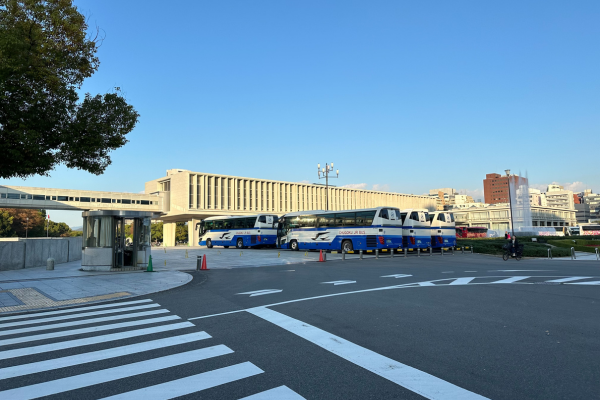
Bus shelters across Ghaziabad and Noida have increasingly turned into "ghost shelters," with commuters reporting that buses often bypass designated stops altogether, leaving several shelters damaged, encroached upon, or repurposed for parking and small businesses instead of serving their intended function.
In Ghaziabad's Indirapuram area, Raj Nagar Extension resident Lakshmi Verma said she no longer waits at the bus stop near her locality while travelling to Muradnagar, choosing instead to stand by the roadside, since buses simply do not stop at the shelter. Her experience reflects a broader pattern reported by commuters across the city, where shelters meant to provide shade and seating while waiting for buses have instead become unreliable points of access to the city's bus network.
Several shelters across Ghaziabad have been taken over for commercial use. In Gyan Khand, Indirapuram, a paratha stall has occupied a shelter's passenger benches and set up three plastic tables at the site. In Kanawani, a shelter has been used to run a tyre-repair shop for the past eight years, according to its operator, who said he had never once seen a bus stop there during that period.
The scale of Ghaziabad's bus network remains limited relative to the city's needs, with only 33 of the city's 50 buses currently operating, spread across six routes. The Old Bus Adda-Mandola route runs just two buses on an hourly frequency, while the Old Bus Adda-Loni route fares comparatively better, with 13 buses operating at 15-minute intervals.
In Noida, commuters described a similar pattern of neglect at bus shelters in Sectors 18, 19 and 20, citing rusted benches, damaged roofs, posters plastered over structures, and accumulated garbage at several stops. Deepak Yadav, a commuter travelling to Greater Noida, said he chooses to stand around 300 metres away from the designated Sector 20 bus stop in order to actually catch his bus, rather than waiting at the shelter itself.
Responding to the reports, Gautam Buddh Nagar District Magistrate Medha Roopam said the Noida Authority would be directed to examine the condition and usage of bus shelters across the city. In Ghaziabad, District Magistrate Ravindra Kumar Mandar said the district administration planned to hold discussions with the municipal corporation and the development authority regarding both existing and upcoming bus stops, particularly as the city looks to induct more buses into its network in the coming period.
The issue underscores a broader civic infrastructure gap across the National Capital Region's satellite cities, where public transport shelters, built to improve last-mile accessibility and encourage bus ridership, have in several cases fallen into disuse due to a combination of irregular bus routing, weak enforcement against encroachment, and limited maintenance follow-through by civic and development authorities.
The report did not specify a timeline for the review of bus shelters announced by district authorities in either city, nor did it detail what enforcement action, if any, is planned against vendors and businesses currently occupying shelters meant for commuter use.
16th Nov, 2026


16th Nov, 2026

12th Nov, 2026

11th Nov, 2026

11th Nov, 2026

11th Nov, 2026
10th Nov, 2026

5th Nov, 2026

Advertisement









 Facebook
 Whatsapp

