Advertisement






The Gulf conflict has disrupted global supply chains, pushed...
REITs have changed the way commercial real estate is owned a...
What really powers the cloud? Behind every Google search, A...
What really powers the cloud? Behind every Google search, A...
Luxury real estate is one of the most talked-about segments ...
India's real estate market in 2030 may not look radically different, but several trends visible today could become far more common. Infrastructure-led development, premium housing, organised rental formats, senior living, greener buildings, specialised assets and technology-enabled properties are already gaining ground. As urbanisation, incomes, digital consumption and infrastructure investment continue to shape demand, these emerging trends could become established parts of India's property landscape by the end of the decade.
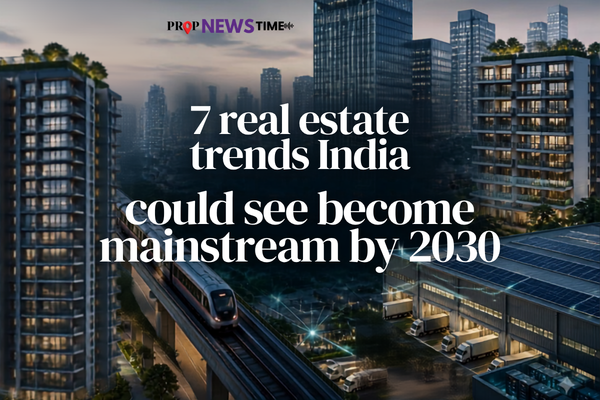
Picture India's real estate market in 2030: homes built around new transit corridors, professionally managed rental communities, senior living integrated into urban neighbourhoods and buildings designed around energy efficiency and technology.
This is not a prediction of a futuristic India. Most of these trends are already visible in the market today. The question is which of them could move from emerging segments to mainstream real estate by 2030.
1. Infrastructure-led development
Metro networks, expressways, airports and employment corridors are already changing the geography of Indian cities. As connectivity improves, residential, commercial and mixed-use development is likely to expand along new infrastructure corridors. By 2030, the relationship between mobility, employment and property demand could become even more pronounced.
2. Premium housing
Premium housing is already gaining a larger share of residential sales in India's major cities. JLL reported that homes priced at 1 crore and above accounted for around 62% of sales across the top seven cities during the first nine months of 2025. By 2030, larger homes, better amenities and service-led developments could occupy an even greater share of organised housing supply.
3. Senior living
India's ageing population and changing family structures are creating demand for organised senior living. The segment is evolving towards communities that combine housing with healthcare, wellness, recreation and support services. By 2030, senior living could become a more familiar residential category, particularly in cities with strong healthcare infrastructure.
4. Organised rental housing
India's rental market remains highly fragmented, but migration, changing employment patterns and younger professionals moving between cities are supporting demand for managed rental formats. Co-living and professionally managed rental housing are already expanding in major urban markets. By 2030, digital agreements, standardised maintenance and bundled services could become more common features of renting.
5. Green buildings
Energy efficiency, water management and building performance are becoming increasingly important to developers, investors and occupiers. As operating costs and environmental considerations gain importance, sustainability could become less about marketing and more about measurable building performance. By 2030, energy-efficient buildings could have a stronger advantage in attracting tenants and institutional capital.
6. Data centres and logistics
Data centres, warehouses and logistics parks are expanding alongside digital consumption, manufacturing and organised supply chains. Deloitte estimates India's AI growth could require an additional 45–50 million sq ft of data-centre real estate by 2030. These specialised assets could therefore become a significantly larger part of institutional real estate portfolios.
7. Smart buildings
AI, sensors and connected building systems are increasingly being used to monitor energy, maintenance, occupancy and security. By 2030, technology could become less about flashy features and more about how efficiently a building operates. The smart building of the future may simply be one that uses data to become more responsive, efficient and predictable.
India's real estate market in 2030 is unlikely to be defined by one dramatic transformation. Instead, today's emerging trends could become tomorrow's standard features from infrastructure-led growth and premium housing to organised rentals, senior living, green buildings and specialised assets.
The future of Indian real estate may therefore be less about science fiction and more about existing trends becoming bigger, more organised and more mainstream.
Sources: Cushman & Wakefield, JLL ,KPMG India, Grant Thornton Bharat,Deloitte India

17th Nov, 2026

17th Nov, 2026


17th Nov, 2026




17th Nov, 2026


17th Nov, 2026
Advertisement








 Facebook
 Whatsapp

