Advertisement






The Gulf conflict has disrupted global supply chains, pushed...
REITs have changed the way commercial real estate is owned a...
What really powers the cloud? Behind every Google search, A...
What really powers the cloud? Behind every Google search, A...
Luxury real estate is one of the most talked-about segments ...
The corporate office is evolving from a conventional workplace into a technology-enabled, flexible and experience-driven environment. Artificial intelligence, real-time occupancy data, smart-building systems, hybrid layouts, wellness-focused design and sustainable infrastructure are increasingly shaping workplace strategies. At the same time, companies are adopting flexible leasing models, frictionless digital access and dedicated focus zones to respond to changing employee expectations. Research from JLL, CBRE and Gensler indicates that future-ready offices will increasingly combine technology with human-centric design, using physical space to support collaboration, productivity, wellbeing and organisational culture.
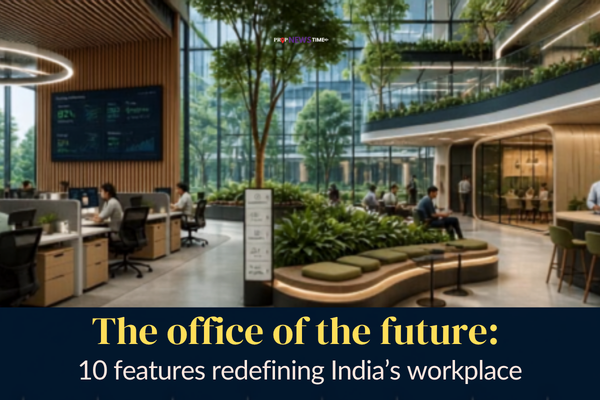
The office is no longer simply a place where employees report to work each day. Hybrid working, advances in artificial intelligence and changing expectations around workplace experience are forcing companies and real estate owners to reconsider how offices are designed, operated and occupied. Current workplace research points towards buildings that can adapt to changing requirements while providing stronger support for collaboration, wellbeing and productivity.
AI-integrated workspaces
Artificial intelligence is increasingly becoming part of the physical workplace rather than remaining a separate productivity tool. Gensler’s 2026 Global Workplace Survey found that 30% of employees surveyed qualify as AI Power Users, with these employees also reporting stronger levels of team connection and learning. JLL expects offices to increasingly support human-AI collaboration through smart workstations and systems capable of turning workplace interactions into searchable organisational knowledge.
Data-driven space planning
Future offices are expected to rely more heavily on actual utilisation data instead of conventional assumptions about how much space employees require. CBRE’s workplace research identifies collaboration as a major reason employees return to offices, while corporate real estate teams are increasingly focused on portfolio optimisation. JLL’s occupancy research also indicates that office utilisation has recovered significantly, encouraging companies to replace permanently assigned desks with flexible areas such as focus rooms, phone booths and smaller collaboration spaces.
Smart buildings and digital twins
Buildings are becoming increasingly responsive through networks of sensors that monitor occupancy, air quality, temperature, humidity and equipment performance. These systems can feed building-management platforms that automatically adjust heating, ventilation, lighting and other operations according to real-time conditions. Digital twins are also gaining traction, allowing building owners to create virtual representations of properties and assess potential upgrades before committing capital. The focus is increasingly shifting towards combining multiple data sources to generate useful operational insights.
Hybrid-first flexible layouts
The future office is increasingly being planned as a destination for activities that benefit from physical interaction, rather than as a mandatory location for every task. Flexible and activity-based layouts allow teams to use different spaces depending on their requirements, from collaborative areas to individual focus zones. Workplace research suggests that the value of an office will increasingly be judged by its ability to support collaboration, company culture and meaningful interaction rather than simply by the number of employees occupying desks.
Biophilic design and employee wellness
Nature-inspired elements are becoming more central to workplace design. Greater access to daylight, greenery, natural materials and organic forms is increasingly being incorporated into office environments to support employee wellbeing. Research cited in the supplied material links biophilic design with stress reduction and productivity, while newer approaches to regenerative design seek to make workplaces actively supportive of employee recovery and wellbeing rather than treating comfort as an optional amenity.
Sustainability as a baseline
Sustainability is moving from a differentiating feature towards an expected component of modern office buildings. Green-building and wellness certifications such as LEED, WELL and BREEAM are increasingly influencing leasing and investment decisions. Regulatory scrutiny around environmental claims is also growing, making measurable performance more important than broad sustainability messaging. The supplied research cites an example of a LEED Platinum office in Boston that was assessed as significantly more efficient than a comparable conventional building.
Hospitality-inspired workplaces
Offices are increasingly borrowing concepts from the hospitality sector to create environments that employees actively want to use. Food and beverage facilities, wellness areas, social spaces and curated common areas are being incorporated into workplace design to encourage interaction and reinforce organisational culture. The underlying shift is that employees are more likely to value the office for experiences that are difficult to reproduce at home, particularly collaboration, social interaction and a sense of belonging.
Flexible real estate and lease models
Changing workforce requirements are also affecting the way companies occupy commercial real estate. Long-term, fixed leases are increasingly being supplemented by managed offices, flexible workspaces and adaptable footprints that can expand or contract with business requirements. This approach gives companies greater flexibility as employee numbers, project requirements and workplace strategies change, reducing the need to commit to a fixed office configuration for long periods.
Frictionless and secure access
Building access is becoming increasingly digital, with mobile credentials, digital wallets and biometric authentication gradually replacing conventional access cards. These systems can make entry more seamless while also connecting security infrastructure with other building systems. Access controls can be integrated with technologies governing lighting, HVAC and life-safety systems, creating a more coordinated building environment while maintaining security.
Acoustic design and focus zones
As offices adopt open and flexible layouts, the need for quiet spaces and better acoustic planning is becoming increasingly important. Dedicated focus areas, improved sound management, natural light and thermal comfort are increasingly viewed as functional requirements for cognitive performance rather than optional workplace amenities. The research warns that companies investing heavily in workplace technology without addressing basic physical comfort could undermine the productivity benefits they are seeking from their offices.
The emerging workplace model combines technology, flexibility and human-centred design rather than relying on any single feature. AI and building data can make workplaces more responsive, while flexible layouts and lease structures allow companies to adapt their physical footprint. At the same time, wellness, sustainability, hospitality and acoustic design are becoming increasingly important to the employee experience. Together, these trends point towards offices that function less like static real estate and more like adaptive environments designed around how people actually work.
Sources JLL, Gensler, CBRE, ACTIU,

17th Nov, 2026

17th Nov, 2026


17th Nov, 2026




17th Nov, 2026


17th Nov, 2026
Advertisement








 Facebook
 Whatsapp

