Advertisement






Russia's Central Bank has criticised the state for breaching minority shareholders' rights during recent asset seizures, signaling the first pushback from within the Russian elite against the government's nationalisation process. The issue centers on gold miner UGC, where the state failed to make a legally required buyout offer, affecting both retail and institutional investors. Experts warn that such actions could undermine private property rights, investor confidence, and future public listings. With roughly USD 50 billion in assets seized since the start of the Ukraine conflict, tensions between market-oriented technocrats and state authorities are becoming increasingly visible.
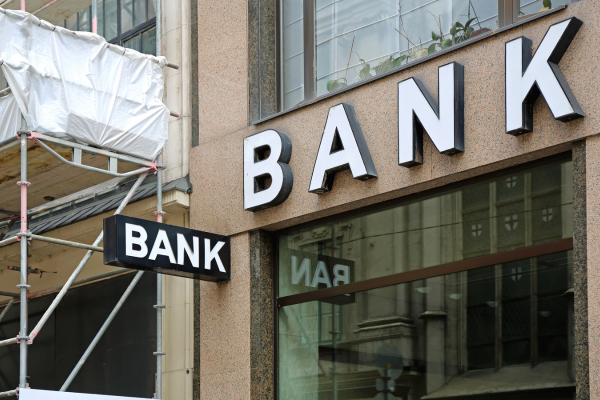
Russia's Central Bank has raised concerns that the state violated the rights of minority shareholders in several recent asset seizures, marking the first notable challenge from within the Russian elite to the ongoing nationalisation process. Sources told Reuters that the controversy mainly involves gold miner UGC, where authorities did not make a legally mandated buyout offer to existing shareholders. Since the onset of the conflict in Ukraine, tens of billions of dollars in assets belonging to Western and Russian investors have been transferred under state control. Advertisement


Market-friendly technocrats, Central Bank officials, and finance ministry representatives are reportedly uneasy with what they view as a shift toward a command-style economic model reminiscent of the Soviet era. Officials are concerned that the state is prioritising military objectives over market stability, potentially harming long-term investor confidence.
While the seizure itself is not being questioned, the Central Bank has emphasised that the state must comply with laws requiring buyout offers for public company shareholders. Sources indicate that private investors holding UGC shares, who were not involved in any legal disputes or linked to the former billionaire owner Konstantin Strukov, have effectively seen their stakes devalued. Private investors voiced concerns, suggesting the law appears suspended whenever nationalisation occurs.
UGC staged one of Russia's largest initial public offerings in 2023 and was seen as a safe-haven investment in gold during a period of significant foreign capital outflows. About 10% of its shares are held by retail investors, and legal experts confirm that Russian law mandates any new holder of more than 30% of a company's shares to make a buyout offer within 35 days, without exceptions for the state. Observers warn that repeated violations could discourage future public listings and retail participation.
Since the start of Moscow's "special military operation" in Ukraine, authorities have seized roughly USD 50 billion worth of assets, including stakes in fleeing Western companies such as Danone and Carlsberg. Domestic companies have also changed hands due to corruption claims, alleged privatisation violations, or poor management. These actions represent the largest property redistribution in Russia since the 1990s, a period when Soviet-era state assets were sold at low prices to private investors.
Concerns over market stability have intensified, especially in light of President Vladimir Putin's calls for more companies to sell shares publicly to support investment amid rising debt costs and a slowing economy. The UGC case, along with broader inconsistencies in state policies, has contributed to a "Russian discount" that, combined with lower interest rates, has weighed on the Russian stock index, which has declined roughly 30% since early 2022. MOEX chairman Sergei Shvetsov urged the state to follow its own rules for public companies, highlighting that inconsistencies undermine investor trust and market functionality.
Budgetary constraints and complex valuation procedures have delayed the execution of mandatory buyout offers. One proposed solution involves the rapid sale of seized assets, shifting buyout obligations to new owners. Following a recent decree aimed at accelerating property sales, copper producer UMMC is emerging as a likely buyer for the UGC stake, with the finance ministry targeting a transaction of 100 billion roubles (USD 1.23 billion) by the end of October.
Vladimir Chistyukhin, first Deputy Chairman of the Central Bank overseeing financial markets, echoed these concerns, warning that continued disruptions in property rights could deter foreign investors even if a resolution is achieved in Ukraine. He stressed that it is essential for all issues arising from state interventions in individual corporations to be resolved to restore market credibility and investor confidence.
Source Reuters

5th Jun, 2025

25th May, 2023

11th May, 2023

27th Apr, 2023
Advertisement





 Facebook
 Whatsapp