Advertisement






Delhi has cleared a PM-Pragati-ike project-monitoring mechanism to speed up major public works, especially those above INR 5 crore. The system, expected to be known as CM-Pragati, will allow the Chief Minister to review progress through a digital dashboard and hold departments accountable for delays. Alongside this, the city has announced a detailed waste-management and pollution-control plan. The approach includes expanding waste-to-energy capacity, upgrading existing plants, adding a new WTE plant in Bawana by mid-2027, and targeting the removal of legacy waste by December 2028.
The Delhi government has approved a PM-Pragati-style system to improve the pace and coordination of major public-infrastructure projects. This mechanism is expected to function under the Chief Minister's direct supervision and may be formalised as 'CM-Pragati.' It will use real-time monitoring through a centralised online dashboard. All departments will be required to update project status regularly, especially for works costing INR 5 crore and above. Officials said the purpose is to reduce delays, strengthen inter-department coordination and ensure timely decision-making for projects such as urban infrastructure upgrades and the cleaning of the Yamuna River. Advertisement


The decision follows repeated concerns about uneven progress across departments and the slow execution of large-scale projects. Past years have seen delays in multiple civic works due to approval bottlenecks, contractor issues and coordination gaps. The government expects the new system to address these concerns by allowing quicker escalation of problems and immediate direction from the Chief Minister's Office.
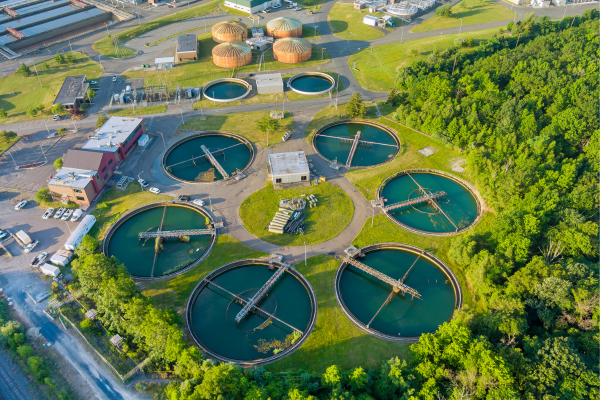
Along with this, the government has outlined a comprehensive plan to manage and process municipal solid waste as part of its long-term pollution-control strategy. The plan aims to achieve complete municipal solid waste collection and segregation in the coming years, with a structured timeline extending to 2028. This includes upgrading existing waste-processing systems and expanding facilities that convert waste to energy.
Delhi currently has waste-to-energy plants at Okhla, Narela-Bawana, Tehkhand and Ghazipur. These facilities together handle around 8,173 tonnes of waste per day. Under the new plan, the combined processing capacity is set to increase to around 15,573 tonnes per day by December 2027. The expansion includes enhancements at existing sites and the commissioning of a new WTE plant in Bawana, which is planned for mid-2027. Officials said the increased capacity is necessary to handle growing waste volumes and reduce dependence on landfills.
The city's three major dumping sites - Ghazipur, Bhalswa and Okhla - together hold close to 160 lakh metric tonnes of legacy waste. The government has set a target to clear this legacy waste entirely by December 2028. Various technologies, including bio-mining, are being used to process old waste and free up land. Past efforts at these sites have seen partial progress, but the new plan sets a fixed timeline and links landfill remediation with increased processing capacity at WTE plants.
The waste-to-energy strategy is expected to reduce emissions from unmanaged waste and lower landfill fires, which often contribute to poor air quality. However, experts have repeatedly noted that the success of such plants depends on proper segregation of waste at the household and community levels. Mixed waste entering WTE plants can affect efficiency and lead to higher emissions. The government has therefore emphasised improving segregation practices and strengthening municipal collection systems.
Combined with the CM-Pragati monitoring approach, officials expect that the city's infrastructure and waste-management projects will move with greater discipline and transparency. Both measures are being positioned as long-term interventions to improve how Delhi handles essential civic work and environmental challenges.

5th Jun, 2025

25th May, 2023

11th May, 2023

27th Apr, 2023
Advertisement





 Facebook
 Whatsapp