Advertisement






The MMRDA recently lowered India's largest 13.34?metre TBM at the Thane shaft a significant step for the Thane-Borivali twin tunnel project beneath Sanjay Gandhi National Park. When completed, the 11.8?km, three-lane twin tunnels will link Ghodbunder Road with the Western Express Highway, cutting the current 60-90 minute commute down to around 15 minutes. Construction has advanced with casting yards, shaft work, and land acquisition. Planned to start tunnelling early next year, the project uses advanced TBMs to limit ecological impact and promises major relief to traffic, pollution and travel time for commuters.
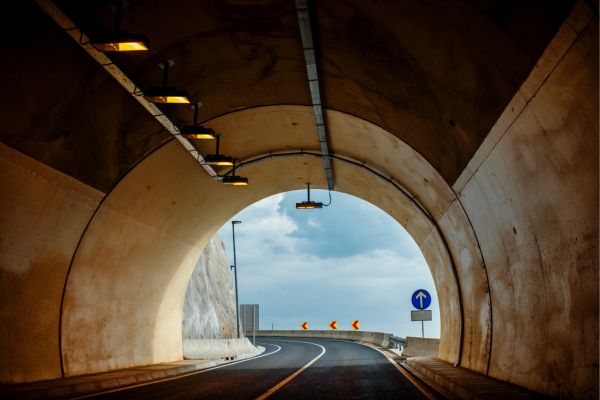
The Mumbai Metropolitan Region Development Authority (MMRDA) has recently lowered a 13.34 metre single shield tunnel boring machine (TBM) at the Thane launch shaft for the Thane-Borivali Twin Tunnel, marking a major step in the execution of the country's largest-diameter and longest urban road tunnel. This milestone comes after months of careful shaft excavation that began last year in October. The project aims to create two parallel three?lane tunnels, spanning 11.8?km beneath the environmentally sensitive Sanjay Gandhi National Park (SGNP), connecting Ghodbunder Road in Thane with the Western Express Highway in Borivali. Once completed, it is expected to reduce the present 60-90 minute commute to roughly 15 minutes. Advertisement


Construction has progressed steadily. On the Thane side, the casting yard is fully operational, and precast segments for tunnel lining have been prepared. Meanwhile, the Borivali casting yard is under preparation, with land acquisition in Thane largely completed and rehabilitation of project-affected households in Borivali ongoing. The MMRDA has chosen advanced single-shield TBMs capable of handling variable rock conditions and deep overburden to ensure minimal disruption to SGNP's forest ecosystem. The two machines, named 'Nayak' and 'Arjuna', have been procured from German manufacturer Herrenknecht through its Chennai facility. Tunnelling is planned to begin around February-March next year.
Each tunnel will feature three lanes, including an emergency lane, along with cross-passages every 300 metres for safety. Modern systems for ventilation, firefighting, smoke detection, CCTV monitoring, and LED signage are being installed to ensure passenger safety. The project also incorporates extensive environmental safeguards, including real-time monitoring, vibration control, and groundwater management, to protect SGNP's sensitive flora and fauna.
Once operational, the twin tunnels are expected to significantly ease traffic congestion along Ghodbunder Road, the Aarey-Colony route, and the Dahisar-Kandivali stretch, reducing fuel consumption and vehicular emissions. The project is also anticipated to improve overall mobility and connectivity for commuters across Mumbai's northern suburbs.

5th Jun, 2025

25th May, 2023

11th May, 2023

27th Apr, 2023
Advertisement





 Facebook
 Whatsapp
