Advertisement






Union Road Transport Minister Shri Nitin Gadkari reviewed progress on the 1,350-km Delhi-Mumbai Expressway during a visit to Surat, stressing efforts to expedite completion of the country's largest highway project. The expressway will cut travel time between Delhi and Mumbai to about 12 hours from the current 24. Major stretches in Haryana, Rajasthan and Madhya Pradesh are already operational, with work in Gujarat and Maharashtra advancing steadily. Gadkari said minor technical issues were being resolved and quality checks, green cover development and engineering upgrades were ongoing. He highlighted future plans for electric trucks and buses on the corridor, which is expected to boost exports, tourism and connectivity across five states.
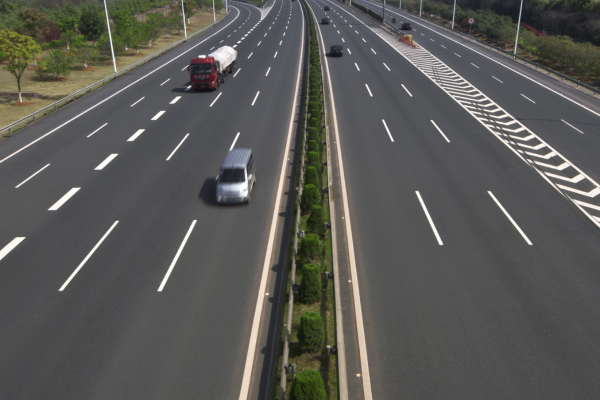
Union Minister of Road Transport and Highways Shri Nitin Gadkari reviewed construction progress on the Delhi-Mumbai Expressway earlier this week during his visit to Surat in Gujarat, reiterating that efforts were underway to complete the large-scale project at the earliest. The ministry has been monitoring the expressway frequently as it is one of the country's most crucial infrastructure corridors. Advertisement


The 1,350-kilometre expressway, which will link India's national capital with its financial capital, is expected to bring down the travel duration between Delhi and Mumbai to nearly 12 hours, compared with close to 24 hours at present. Significant stretches in Haryana, Madhya Pradesh and Rajasthan have already been opened over the past year, and work in Gujarat and Maharashtra has been progressing in phases.
Speaking to reporters in Surat after inspecting an under-construction segment passing through the state, Gadkari mentioned that the ministry was attempting to expedite completion by addressing remaining obstacles. He added that the road quality was satisfactory and that minor technical issues were being corrected using advanced engineering solutions. He further noted that extensive quality checks were being undertaken on the eight-lane access-controlled corridor to ensure smooth and safe travel conditions. Green cover development is also underway, with planned tree plantations along both sides of the highway.
The Minister stated that he aspired to see electric trucks and buses operating on the route in the future, explaining that global best practices and technologies would be introduced to reduce logistics costs. He expressed confidence that the expressway, once ready, would support exports, encourage tourism, and improve nationwide mobility for commuters and freight operators alike.
Gadkari also referred to the project's origins, recalling that its foundation stone had been laid in 2019. He mentioned that the corridor would ultimately extend connectivity into Uttar Pradesh and Rajasthan, allowing direct access between Delhi and Mumbai for travellers coming from multiple northern regions.
Calling the route one of the most significant highways in India's infrastructural history, he pointed out that few nations had road projects of comparable length and width. He credited engineers, contractors and the Gujarat state government for enabling the project to reach the advanced stage it has achieved.
After his assessment in Surat, the minister continued to Navsari and Valsad to examine progress on other stretches within south Gujarat. The corridor is planned to provide connectivity to key economic hubs across Haryana, Rajasthan, Madhya Pradesh, Gujarat and Maharashtra, strengthening industrial and commercial linkages across western and central India.
Source - PTI

5th Jun, 2025

25th May, 2023

11th May, 2023

27th Apr, 2023
Advertisement





 Facebook
 Whatsapp