Advertisement






The Central Empowered Committee (CEC) has recommended conditional approval to cut 1,571 trees in the Taj Trapezium Zone (TTZ) for the doubling of the Agra-Bandikui railway line. The proposal includes planting 16,230 trees across 25 hectares, maintaining them for ten years, and fencing the plantation sites. The Supreme Court will hear the matter shortly. The TTZ covers 10,400 sq km around Agra and adjoining districts, established to protect the Taj Mahal. The CEC emphasized strict environmental safeguards and penalties for non-compliance to minimize ecological impact.
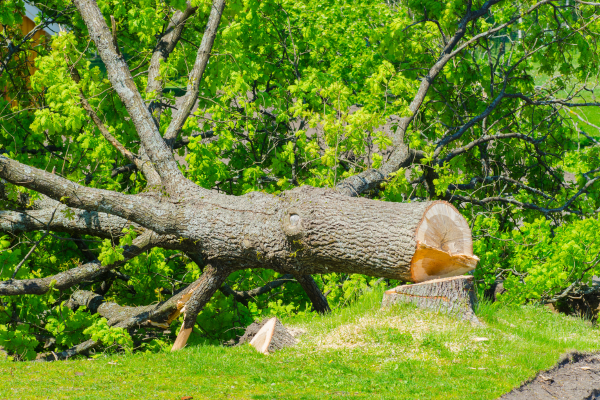
The Central Empowered Committee (CEC), appointed by the Supreme Court, has recommended conditional approval to fell 1,571 trees in the Taj Trapezium Zone (TTZ) for doubling the Agra-Bandikui railway line. The TTZ spans 10,400 sq km and was established to protect the Taj Mahal from environmental damage. The committee submitted an 82-page report to the apex court, suggesting that permission may be granted to cut 610 trees in Agra and 961 in Bharatpur, both within the TTZ. Advertisement


The project, handled by North Central Railway, involves doubling 150 km of railway track between Agra and Bandikui, of which 83 km lies inside the TTZ. Last year, the railways had sought clearance to fell 2,895 trees on railway land and 52 on private land for the project, which is estimated to cost INR 1,518 crore. Following the petition, the Supreme Court had directed the CEC to inspect the site and submit recommendations.
To reduce environmental impact, the CEC recommended modifying the project alignment and limiting tree felling to 1,571 trees. Compensatory afforestation will require planting 16,230 trees over 25 hectares 6,220 in Agra on 10.8 hectares and 10,010 in Bharatpur on 14.1 hectares. These plantations will be designated as protected forests and maintained for ten years. To safeguard the saplings from grazing, each site must be enclosed with a six-foot chain-link fence mounted on a two-foot concrete or brick base.
The committee also advised that the TTZ chairman supervise implementation, and that a penalty of INR?1 lakh be levied for each tree felled beyond the approved number. Funds required for plantation, fencing, and maintenance must be deposited with the divisional forest officers, as estimated by the state forest department. Environmentalists have raised concerns, noting that the TTZ acts as the region's green lungs, and the Supreme Court must now decide whether the proposed conditions are sufficient to protect the zone.

5th Jun, 2025

25th May, 2023

11th May, 2023

27th Apr, 2023
Advertisement





 Facebook
 Whatsapp