Advertisement






The first operational section of the Patna Metro, covering a 3.45-km elevated stretch from Pataliputra Bus Terminal to Bhoothnath, began services last month. Developed at a total project cost of INR 13,925.5 crore, the metro is jointly funded by JICA, the central, and the state governments. Managed by Delhi Metro Rail Corporation (DMRC), this launch precedes full operations planned for 2027. While the opening has created public excitement, several residents have pointed out incomplete civil work and slower train speeds compared to metros in larger cities.
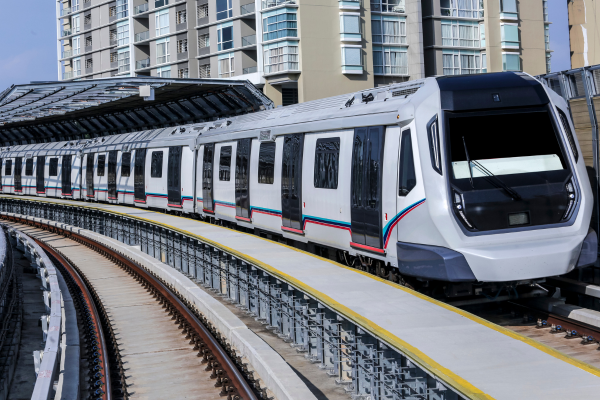
The first stretch of the Patna Metro, spanning 3.45 km between Pataliputra Bus Terminal, Zero Mile, and Bhoothnath stations, began operations last month. This marked the first phase of Bihar's long-awaited metro project, which aims to improve connectivity within Patna and reduce road congestion. The line, managed by Delhi Metro Rail Corporation (DMRC), has been designed with a blend of functionality and local culture. Advertisement


Train coaches feature artwork celebrating Bihar's heritage, including Madhubani motifs and illustrations of landmarks such as Mahavir Mandir, Golghar, and Shanti Stupa. The service currently runs from 8 am to 10 pm, with trains operating every 20 minutes. The fare between Pataliputra Bus Terminal and Zero Mile is INR 15, while a ride to Bhoothnath costs INR 30.
The project, with an estimated investment of INR 13,925.5 crore, is being financed jointly by the Japan International Cooperation Agency (JICA), the central government, and the Bihar state government. The foundation stone for the metro was laid in 2019 by Prime Minister Narendra Modi, and Chief Minister Nitish Kumar inaugurated the first section a few weeks ago, shortly before the state election schedule was announced.
Many residents have welcomed the new metro as a sign of urban progress. Teenagers and families from nearby areas have been visiting the stations to experience the new service, often taking leisure rides and sharing their experiences online. However, a section of passengers expressed disappointment over the train's slow speed compared to metros in cities such as Delhi or Hyderabad. One student remarked that videos of other city metros had led him to expect faster movement.
Some passengers were also informed that completing a full circle ride and exiting from the same station required a separate ticket, as fare rules are structured by distance and trip direction. Despite minor confusion, staff members were available to assist first-time users.
Security along the metro corridor is handled by the Bihar Special Armed Police (BSAP), with surveillance systems installed across all operational stations. While the inaugural section has opened for public use, signs of incomplete construction are still visible. Scaffolding remains at the Pataliputra Bus Terminal station, and staircases at Bhoothnath station are yet to be finished.
Several locals have questioned the timing of the inauguration, pointing out that only a small portion of the planned route is functional. Some auto-rickshaw drivers noted that the launch seemed politically timed with the upcoming elections, as most visitors were there to enjoy the new infrastructure rather than commute.
The Patna Metro project consists of two corridors under Phase One the 16.86 km Red Line and the 14.56 km Blue Line together featuring 24 stations across the city. The metro's full operations are expected by 2027, once both corridors are completed.
Source PTI

5th Jun, 2025

25th May, 2023

11th May, 2023

27th Apr, 2023
Advertisement





 Facebook
 Whatsapp