Advertisement






The Maharashtra government has cleared the INR 23,487 crore Metro Line 11 project, running 17.5 km from Wadala's Anik Bus Depot to SPM Circle near the Gateway of India, with 14 stations-13 underground. The project will be funded jointly by the state (INR 3,137 crore), the centre (INR 3,137 crore), Brihanmumbai Municipal Corporation (INR 2,411 crore) and Mumbai Port Authority (INR 804 crore), with a 60% loan from financial institutions. The fare slab is fixed between INR 10 and INR 70, rising by INR 10 every three stations, and the line aims to ease traffic congestion and integrate with other metro lines.
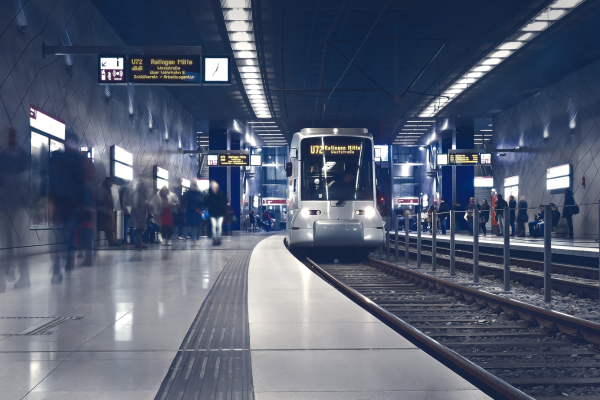
The Maharashtra government has approved Metro Line 11 (Green Line), a 17.5 km corridor connecting Anik Bus Depot in Wadala to SPM Circle near the Gateway of India. The project, costing INR 23,487 crore, will feature 14 stations, 13 of which are underground, and is designed to reduce traffic congestion between central and south Mumbai while connecting with existing and upcoming metro lines. Advertisement


Funding for the project will come from multiple sources. The state and central governments will each contribute INR 3,137 crore, while the Brihanmumbai Municipal Corporation (BMC) will provide INR 2,411 crore and the Mumbai Port Authority (MbPA) will provide INR 804 crore, as the line passes through areas under their jurisdiction. In addition, the state has approved a loan of INR 12,163 crore from financial institutions, covering about 60% of the total project cost. Interest-free subordinate debt will cover half of the state and central share.
The government has set a fare range from INR 10 to INR 70, with fares increasing by INR 10 every three stations. The fare fixation committee will be able to revise rates with prior government approval.
The metro will require 20.353 hectares of government land and 2.36 hectares of private land. In case of cost overruns, local authorities are expected to arrange additional funds through floor space index (FSI) revenue, transit-oriented development (TOD), or loans from financial institutions, according to the state urban development department.
The line is expected to pass through some of Mumbai's busiest areas, providing faster commuting options and integrating with other metro corridors to improve connectivity across the city.

5th Jun, 2025

25th May, 2023

11th May, 2023

27th Apr, 2023
Advertisement





 Facebook
 Whatsapp