Advertisement






The Central government has commended Haryana's strides in modernising land records, highlighting initiatives like the Tatima Updation Project by HARSAC, which maps individual land parcels for transparency. During a recent review, Union Secretary Manoj Joshi recognised projects under the Digital India Land Records Modernization Programme (DILRMP), including the NAKSHA and IGR systems. Haryana officials showcased key developments like the HaLSMP drone surveys covering over 38,000 sq. km and the digitisation of 39.80 crore revenue record pages under the MRRR project. Equipped with advanced scanning and climate-controlled storage, all 22 districts now have modern revenue record rooms, ensuring preservation, access, and improved land governance.
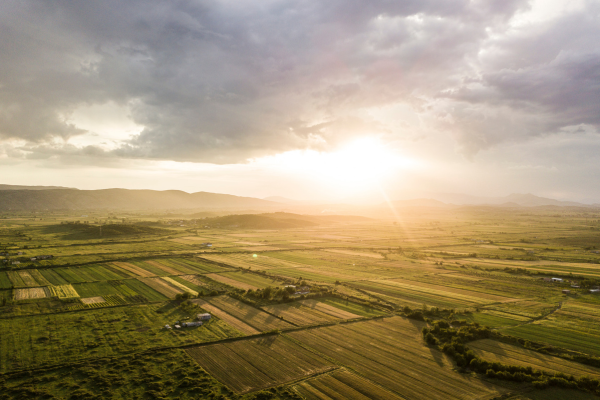
The Central government recently lauded Haryana for its progressive work in land record modernisation and hinted at the possibility of allocating project-specific financial support to sustain and expand these initiatives. This backing is likely to give a significant push to initiatives such as the Tatima Updation Project, spearheaded by the Haryana Space Applications Centre (HARSAC). The project involves detailed sketching and mapping of individual land parcels-an essential step towards establishing transparent and accurate land ownership documentation, according to an official release. Advertisement


Union Secretary of the Department of Land Resources, Manoj Joshi, conducted the review of several key programmes under implementation. These included the Digital India Land Records Modernization Programme (DILRMP), NAKSHA, the Inspector General of Registration (IGR) system, and various Capital Incentive Schemes.
During the meeting, Sumita Misra, Haryana's Financial Commissioner for Revenue and Disaster Management, conveyed that the state has been advancing steadily in reforming its land governance practices. She stated that Haryana has undertaken significant initiatives, such as the Haryana Large Scale Mapping Project (HaLSMP) and the Modern Revenue Record Rooms (MRRR) project, to shield essential land data from both natural and human threats.
According to data shared, the Survey of India (SoI) has already completed drone surveys over a vast area of 38,406.36 sq. km. Furthermore, Drone Imaging and Information Service of Haryana Limited (DRIISHYA) was tasked with surveying an additional 5,805.69 sq. km within restricted zones. Of this, 4,936.67 sq. km has been surveyed and the data subsequently handed over to SoI for processing.
Running in parallel with HaLSMP, the MRRR project-launched in late December 2019-focuses on the conservation of historical land revenue records in all 22 districts of the state. Documents such as Jamabandis, Mutations, Parat Sarkar, Field Books, Mussavis, and Revenue Court Orders are being digitised, indexed, and securely archived.
To date, approximately 39.80 crore pages have been scanned, of which 39.57 crore pages have been uploaded to a centralised database, accessible via the Web HALRIS portal. Misra stated that this enormous digitisation drive not only protects historical data from potential damage but also makes it readily available for public access.
Modern record rooms have now been set up in every district, equipped with climate-controlled storage, high-end scanning devices, and public service counters dedicated to handling grievances and document-related requests. She added that the digitised data and storage infrastructure have undergone three layers of verification to ensure accuracy and reliability.
Projects like HARSAC's parcel mapping, drone surveys by SoI and DRIISHYA, and the digitisation of age-old documents under MRRR are not only preserving historical data but also enabling more informed land governance. As these systems mature, they promise to reduce disputes, improve service delivery, and offer a resilient foundation for land-related policy-making in the state.
Source - PTI

5th Jun, 2025

25th May, 2023

11th May, 2023

27th Apr, 2023
Advertisement





 Facebook
 Whatsapp