Advertisement






To manage Jaipur's rapid urban expansion, the Rajasthan government has begun feasibility studies for developing satellite towns in Bassi, Bagru, Chomu, and Kotputli. These towns, within 20-40 km of the capital, are being considered for high-tech township models inspired by Gujarat and Hyderabad. A multinational firm is assisting with planning, and Jaipur Metro extensions are being explored to ensure strong connectivity. The new Township Policy 2025 mandates green zones, public utilities, and housing for workers to promote sustainable, inclusive growth. These efforts aim to decentralize Jaipur's population, reduce congestion, and encourage private investment through simplified, eco-conscious urban planning frameworks.
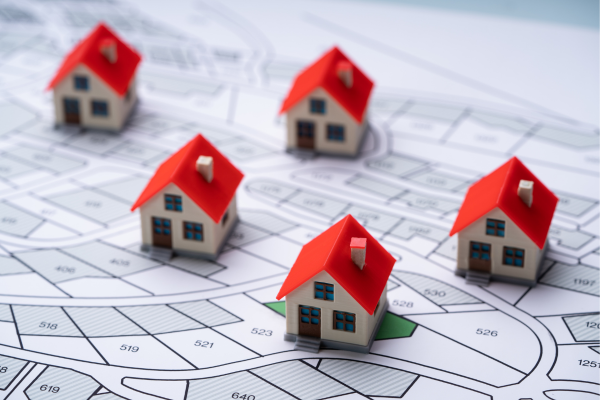
To manage Jaipur's rapidly growing urban pressure, the Rajasthan government has commenced feasibility studies for setting up satellite towns around the state capital. The state's Urban Development Department has identified Bassi, Bagru, Chomu, and Kotputli as potential locations. These towns are situated within a 20 to 40-kilometre radius of Jaipur and have shown notable industrial and residential activity in recent years. Advertisement


Urban Development Minister Jhabar Singh Kharra confirmed that the objective is to develop high-tech townships modeled on successful examples from Gujarat and Hyderabad. Government officials have already engaged with a major multinational company to assist with planning and implementation. These satellite towns are intended to decentralize urban growth, create independent economic hubs, and reduce excessive population migration into Jaipur.
These studies follow recent amendments to township development regulations, which were proposed and approved as part of the state budget earlier this year. The updated framework offers developers more streamlined processes while ensuring urban planning adheres to sustainability benchmarks. The reforms are also aimed at encouraging private sector participation in township development by reducing bureaucratic hurdles and aligning Rajasthan's urban policy with progressive planning models seen in other Indian states.
As part of the feasibility process, officials are examining options for extending Jaipur Metro connectivity to the identified satellite locations. The idea is to ensure that residents of the new towns have quick and reliable access to the capital city for work, education, and services.
However, concerns have emerged over the proposed 2.85-km metro stretch from Badi Chaupad to Transport Nagar. Some stakeholders raised objections due to the short distance between stations. In response, alternative routes are being explored, including a potential corridor running through Hawa Mahal Road to Galta Ji Temple. Authorities are working to identify the most efficient and cost-effective alignment that will benefit the maximum number of commuters without compromising heritage zones or escalating project costs.
These transport links will play a vital role in the success of the satellite towns. Without dependable connectivity, the aim of reducing urban pressure on Jaipur may not materialize. State planners are therefore placing strong emphasis on infrastructure synchronisation, especially in transit planning, road networks, and utilities.
Alongside these infrastructural developments, the Rajasthan Cabinet recently gave the nod to the Township Policy 2025. The new policy includes mandates for developers to reserve at least 7% of residential township land for green zones, including parks and playgrounds, and a further 8% for public utilities like water supply, waste management, and electrical infrastructure.
In the case of industrial townships, the policy mandates 5% of the land be earmarked for worker housing-an important step in improving urban equity and preventing labour displacement. Moreover, 2.5% of the land must remain undeveloped until project completion and formal transfer, ensuring environmental safeguards and avoiding over-commercialisation in the early stages.
This policy framework marks a shift in the way township development will be managed-placing stronger emphasis on ecological balance, access to essential services, and liveability for all income segments.

5th Jun, 2025

25th May, 2023

11th May, 2023

27th Apr, 2023
Advertisement





 Facebook
 Whatsapp