Advertisement






The Mumbai-Ahmedabad bullet train project has opened the first section of its 21 km undersea tunnel between Bandra-Kurla Complex (BKC) and Thane. This milestone was announced by the Ministry of Railways. The overall 508 km corridor, developed with Japanese Shinkansen technology, has completed 310 km of viaducts, 15 river bridges, and 5 stations. The BKC station's excavation is 80% complete. This progress highlights rapid construction in Maharashtra and aims for new benchmarks in speed and reliability, with E10 Shinkansen trains set for simultaneous introduction in India and Japan.
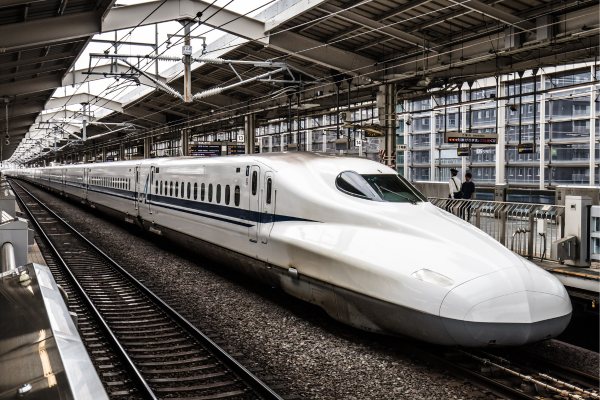
The Mumbai-Ahmedabad bullet train project recently achieved a significant construction milestone by opening the first section of its undersea tunnel. This development, announced by the Ministry of Railways, impacts Maharashtra, connecting Bandra-Kurla Complex (BKC) and Thane, as part of its overall progress towards high-speed rail connectivity. Advertisement


The first section of the 21-kilometer undersea tunnel between BKC and Thane has now opened. This tunnel includes a 7-kilometer undersea stretch beneath Thane Creek. Construction work in Maharashtra has picked up pace, contributing to rapid progress across the entire 508-kilometer corridor. So far, 310 kilometers of viaduct construction are complete. 15 river bridges have been finished, and four more are in advanced stages.
Out of 12 stations, five are completed, and three more are nearing completion. Track laying and construction of overhead electrical wires are also progressing rapidly. The station at BKC is designed to be 32.5 meters below ground. Its foundation is built to support a 95-meter-high building above ground. The entire 508-kilometer corridor is being developed with Japanese Shinkansen technology, which aims to set new benchmarks for speed, safety, and reliability.
In a move reflecting strategic and technological cooperation, the Japanese government has agreed to introduce E10 Shinkansen trains simultaneously in India and Japan. Progress on the procurement of systems for operations and control is also underway.
The development of high-speed rail corridors, especially those involving complex engineering like undersea tunnels, reflects a country's commitment to modern infrastructure.
Source- ANI

5th Jun, 2025

25th May, 2023

11th May, 2023

27th Apr, 2023
Advertisement





 Facebook
 Whatsapp