Advertisement






The RailTrans Expo 2025 was inaugurated in the capital this week by the Indian Chamber of Commerce in collaboration with the Urban Infra Group. With the theme centred around "Viksit Bharat @2047 - Rail & Mobility for a Developed India", the event assembled key voices from government, industry, and academia. Speakers underscored the pivotal role of Indian Railways in shaping the nation's economic and sustainable transformation, with particular focus on digital infrastructure, talent development, green innovation, and global benchmarking.
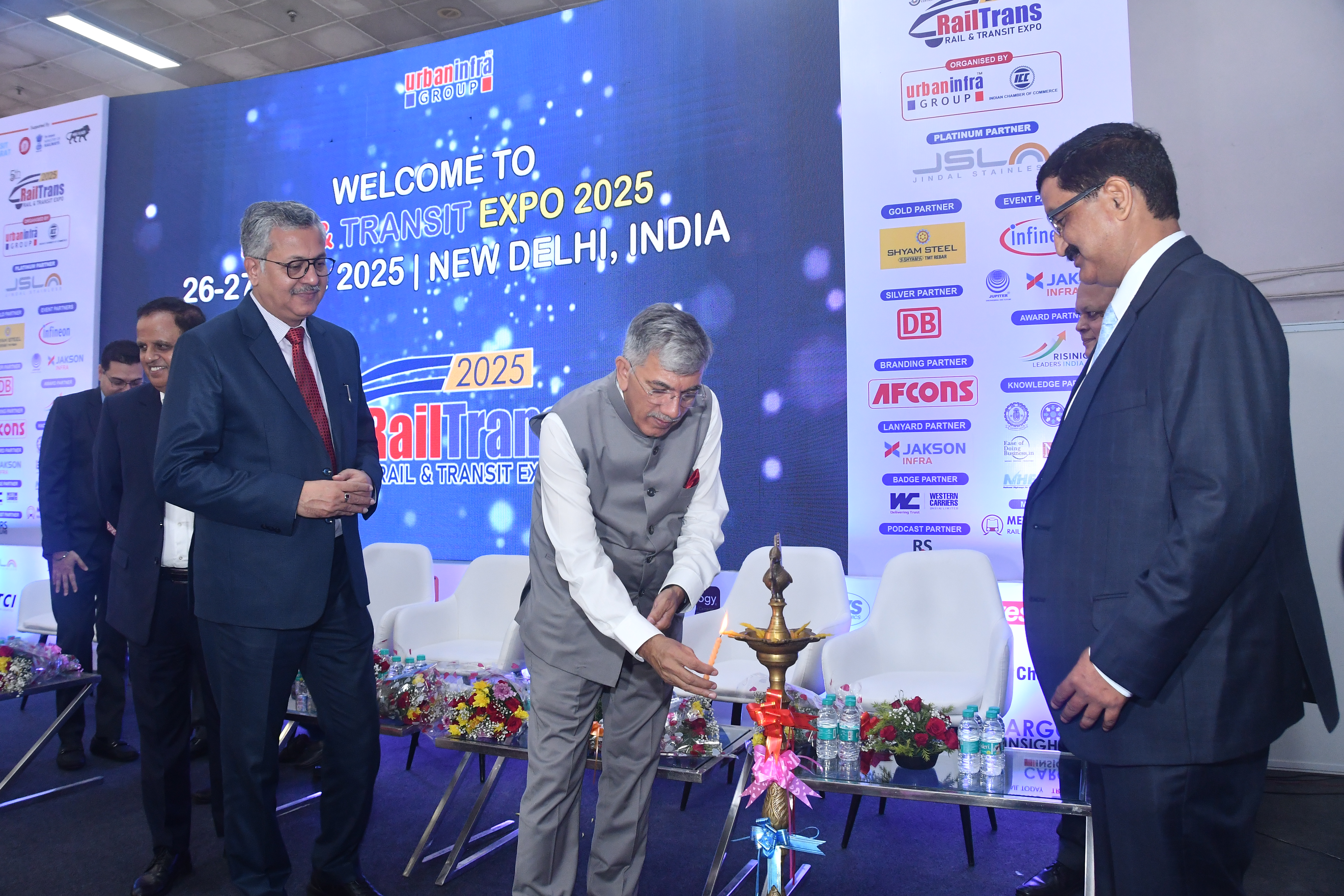
The RailTrans Expo 2025 commenced in New Delhi this week, unveiling a collaborative roadmap for India's transport and infrastructure overhaul under the Viksit Bharat @2047 vision. Organised by the Indian Chamber of Commerce (ICC) in partnership with the Urban Infra Group, the event was held at Bharat Mandapam and gathered senior government representatives, infrastructure developers, logistics heads, and global technology experts. The overarching theme, "Rail & Mobility for a Developed India", set the tone for strategic discussions around rail modernisation, innovation, and future readiness. Advertisement


Prominent speakers included Prof. (Dr.) Manoj Choudhary, Vice Chancellor of Gati Shakti Vishwavidyalaya; Mr. Rajeev Singh, Director General of ICC; Mr. Vijay Sharma, Director at Jindal Stainless Ltd.; Mr. Kanishka Sethia, CEO of Western Carriers India Ltd. and ICC's National Chair for Logistics & Supply Chain; Mr. Kumar Keshav of DB International Operations; and Mr. Sanjiv Garg, Secretary General of CILT India. These industry veterans collectively acknowledged the Indian Railways as a key driver of economic advancement while underlining the necessity for robust skill development, digital infrastructure, and environmentally conscious innovation.
Prof. (Dr.) Manoj Choudhary stated that India was on the verge of a structural shift in its rail and logistics landscape, driven by a more integrated approach to planning and execution. He conveyed that initiatives like PM Gati Shakti, Amrit Bharat stations, and digital public infrastructure are creating a digitally empowered mobility environment. He stressed that institutions like Gati Shakti Vishwavidyalaya were working to nurture the human capital required to drive this transformation forward.
Vijay Sharma of Jindal Stainless Ltd. echoed the sentiment that Indian Railways represents more than just connectivity-it embodies progress, sustainability, and ambition. He remarked that India is helping define the global mobility narrative through technologies such as hydrogen trains and corrosion-resistant materials. He stressed the importance of innovation that prioritises longevity, environmental friendliness, and people-centric values.
Mr. Kanishka Sethia noted that India's infrastructure development was being revolutionised through data, speed, and trust. He explained that the integration of 5G, artificial intelligence, high-speed rail, and carbon-neutral supply chains was ushering in a new era in logistics. He called for a united effort to digitise systems, decarbonise networks, and innovate globally.
Dr. Rajeev Singh from the ICC reinforced the organisation's commitment to enabling industry progress through forums like RailTrans Expo. He highlighted that while the government had taken bold post-pandemic steps in infrastructure investment, industry collaboration would ultimately propel the nation forward. He affirmed that the ICC would continue to support inclusive economic development through policy advocacy and global partnerships.
This edition of RailTrans Expo stood out not merely as a showcase of cutting-edge ideas, but as a unified call for collaboration across sectors. With participation from public and private stakeholders, the event reaffirmed India's vision to craft a rail and logistics framework that is technologically advanced, sustainable, inclusive, and resilient.

5th Jun, 2025

25th May, 2023

11th May, 2023

27th Apr, 2023
Advertisement





 Facebook
 Whatsapp
