Advertisement






The Karnataka Real Estate Regulatory Authority (KRERA) has taken an important step in addressing an issue with a housing project near Bengaluru. KRERA has ordered the developer, Shree Senior Homes, of a senior living project named Sharadindu State III, to transfer a corpus fund of Rs 62.26 lakh to the Resident Welfare Association (RWA) of the project. This directive follows the RWA's request for relief due to the developer's failure to transfer the corpus fund, despite maintaining the project since 2016. The decision highlights KRERA's commitment to protecting the rights and interests of homebuyers and RWAs in real estate developments.Read more

The real estate development in Maharashtra's coastal zones is set to receive a significant boost as the state government permits local authorities to approve construction plans within certain limits without seeking permissions from the Maharashtra Coastal Zone Management Authority (MCZMA). Maharashtra is among the first states to implement this directive, allowing local authorities to grant approval for self-dwelling residential developments up to 3,229 sq ft space without MCZMA recommendations, potentially reducing approval timelines. This decision will facilitate previously stalled coastal development, promoting tourism-related activities along the shoreline. Projects like plotted developments and villa constructions, which have gained traction in recent years, will benefit from this move.Read more

Pune's Slum Rehabilitation Authority (SRA) has issued notices to 22 developers for significant project delays, ranging from five to seven years. Developers attribute the delays to landowner resistance and commit to resolving issues through renewed negotiations. The SRA emphasises developers' responsibility for initial house repair and maintenance post-rehabilitation, actively securing insurance policies for support. With 166 ongoing projects and 61 completed, over 10,800 slum dwellers have been rehabilitated. Challenges persist due to resistance and spatial allocation concerns, but ongoing efforts underscore Pune's commitment to inclusive housing solutions and sustainable urban development.Read more

Mumbai's real estate market has been rattled by a controversy involving fake seals. Five people were detained in August on suspicion of using fake paperwork to develop 55 residential buildings and deceiving buyers since 2015. Among the suspects were a rubber stamp manufacturer, real estate brokers, developers, and a home loan services provider. From sub-registrar offices, architects, and the Vasai Virar Municipal Corporation, among others, they had obtained 115 counterfeit seals. There are now more builders implicated in this fraudulent activity, according to additional investigations, which raises questions about the scope of this forgeries in Mumbai's real estate industry.Read more

The Jharkhand government has approved a Rs 16,320 crore project, 'Abua Awas Yojna (AAY),' to build 8 lakh houses for the needy by March 31, 2026, as pledged by Chief Minister Hemant Soren. The project is divided into phases, with a focus on providing clean and decent three-room houses to marginalized communities. It aims to benefit families living in inadequate housing conditions and includes criteria to prioritize the neediest while excluding certain groups, such as those with existing permanent residences or significant land holdings.Read more
_ 1.png)
Advertisement


The High Court of Karnataka has ordered the Chief Commissioner of the Bruhat Bangalore Mahanagara Palike (BBMP) to digitize all property documents, including old records, and restrict access to authorized officers. The directive, prompted by a petition from Aslama Pasha regarding a building construction dispute, emphasizes that BBMP should serve as the custodian of records and coordinate access within its departments. The court encourages efficient information sharing among BBMP departments, and collaboration with the government's e-Governance Department to create a consolidated repository of property documents. This move modernizes document access, enhances transparency, and streamlines property-related matters, ultimately expediting transactions and dispute resolution.Read more

The Calcutta High Court has instructed the Bidhannagar Municipal Corporation to demolish an unauthorized construction in Shantinagar, Salt Lake Sector V, setting a 1 pm deadline for completion, alongside the disconnection of power and water supplies. The order, issued by Justice Abhijit Gangopadhyay, came after the builder failed to comply with a previous court summons. Residents were granted the right to approach the court for rehabilitation. While the demolition process began, it faced resistance from locals, echoing previous attempts to demolish illegal structures. The court's ruling signifies a critical step in addressing safety, infrastructure, and urban development concerns associated with unauthorized constructions.Read more

The Chennai Metropolitan Development Authority (CMDA), in partnership with Cushman and Wakefield, has initiated a comprehensive study titled 'Housing Demand and Supply within Chennai Metropolitan Area (CMA).' This study aims to address the complexities of housing development in the Chennai Metropolitan Area through data-driven decision-making. The study covers various growth corridors within the CMA and examines multiple demand drivers, including floor space index (FSI) increases and the transfer of development rights. The recent expansion of the Chennai Metropolitan Area's footprint to 5,904 square kilometres has prompted the CMDA to formulate both the third master plan for the original area and a strategic regional plan for the newly added regions.Read more

MahaRERA has deregistered seven real estate projects in Maharashtra, including three in Mumbai and one in Pune. Developers cited reasons such as lack of buyers, registration anomalies, and the need for fresh approvals. MahaRERA initiated the move in February 2023 to enable the deregistration of financially troubled and unviable projects. A total of 170 projects, including 63 from Pune, applied for deregistration. The decision restricts developers from advertising, selling, or inviting buyers for the affected projects. Real estate industry experts have welcomed the option, provided claims are settled transparently. This initiative demonstrates MahaRERA's adaptability and sets a precedent for dynamic real estate regulation.Read more

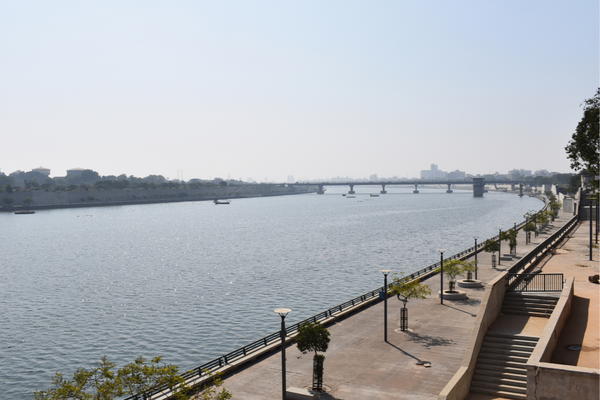
The Sabarmati Riverfront Development Corporation Limited (SRFDCL) recently received approval for its "Sabarmati Riverfront Land Disposal Policy 2023." This policy marks a departure from prior norms, enabling SRFDCL to sell and lease land along the Sabarmati River, fostering a new era of development and transformation. The policy, inspired by the successful GIFT City model, divides the riverfront into eight distinct value zones, offering developers the chance to acquire land development rights. The land's value will be determined by factors like building footprint, providing flexibility to developers. The policy also allocates plots for public facilities, contributing to the city's vibrancy. Overall, it promises to bring growth and transformation to the Sabarmati Riverfront.Read more
Advertisement