Advertisement






The Tamil Nadu government has expanded its single-window system to allow self-certification for residential buildings up to stilt plus two floors. This initiative aims to reduce bureaucratic delays by enabling immediate online approvals for plots up to 2,500 sq ft and built-up areas up to 3,500 sq ft, benefiting low- and middle-income families. Model building plans will be provided to assist applicants. The self-certification system also extends to cottage industries and green factories with built-up areas up to 500 sqm. Additionally, the minimum road access width in village panchayat areas has been reduced from seven to six meters to facilitate rural development. Further reforms include relaxed side setback norms for row and group housing projects and the regularization of individual plots registered before October 20, 2016, in unapproved layouts without a deadline.

The National Green Tribunal's central zone bench has dismissed a petition seeking a construction ban in Chandanpura, Bhopal, citing the area's existing 50-60 residential colonies and its non-designation as a protected forest under the Wildlife Protection Act. The tribunal directed the Town and Country Planning Department to consider environmental sustainability before approving future projects.
The Karnataka government has introduced the A-Khata and B-Khata classification system in Kalaburagi to address longstanding issues around property ownership and asset regularisation in rural areas. Announced during the launch of the e-Khata initiative earlier this week, this move is expected to bring over 1.15 million properties under the tax net, with an estimated revenue of INR 1,272 crore already recorded. Minister Priyank Kharge underscored that the framework would help residents gain legal recognition of their properties. Alongside this, efforts are underway to develop Kalaburagi into a smart city, with a focus on infrastructure, drainage, and beautification.Read more

A recent audit by the Comptroller and Auditor General (CAG) has highlighted significant delays in a major Mumbai railway project, pushing its completion from March 2021 to March 2024, with only 26% progress despite an expenditure of INR 500.9 crore. Key issues include non-compliance with Railway Board guidelines, improper cost estimates by RITES, and delays in land acquisition and rehabilitation. Poor coordination between agencies and premature contract awards further hindered progress. The land acquisition for Phase II remains in its early stages, worsening project delays and inefficiencies.

The Maharashtra government has established a high-level committee to regularise encroachments on government land in tier 2 and 3 cities and monetise them through leasing to generate revenue for local bodies. Headed by principal secretary (urban development) Aseem Gupta, the eight-member committee includes top officials from various departments. The initiative aims to boost income through property tax and land leasing. Approved by CM Devendra Fadnavis, the plan will facilitate planned urban development. The committee will submit a policy report within 15 days for implementation.

Advertisement


The National Company Law Tribunal (NCLT), Mumbai Bench, has approved an INR 391 crore resolution plan for Neptune Developers Limited, marking a major milestone in its insolvency proceedings since July 2021. The plan, submitted by Shree Naman Developers Private Limited (SRA), secured an 85.35% majority from the Committee of Creditors and aims to deliver long-stalled homes to over 3,500 buyers in the Ramrajya and Swarajya projects. It offers refunds for existing buyers, reduced escalation costs, and structured payouts for financial and operational creditors. The NCLT backed the CoC's decision, citing compliance with the IBC and feasibility. This is Shree Naman's second acquisition via the insolvency route as it had acquired Radius Infra Holdings in May last year.

The University of Mumbai (MU) has requested direct monetary compensation from the Mumbai Metropolitan Region Development Authority (MMRDA) for 8.5 acres of land it handed over in 2016 under a memorandum of understanding (MoU) aimed at developing its Kalina campus. Originally, MU was to receive transferable development rights (TDR) and a master plan in exchange. However, with delays in both the TDR issuance and planning progress, MU has now valued the land at around INR 1,200 crore and urged for compensation. MMRDA maintains that final action awaits MU's feedback and formal possession transfer.

The City and Industrial Development Corporation (CIDCO) has presented its highest-ever annual budget of INR 14,130 crore for the financial year 2025-26, aiming to fast-track major infrastructure and urban development initiatives in Navi Mumbai. Key allocations include INR 6,868 crore for general development, INR 3,251 crore for housing, INR 1,120 crore for water supply, and INR 625 crore for metro projects. Additional funds have been earmarked for the Navi Mumbai International Airport, railway upgrades, Navi Mumbai Airport Influence Notified Area (NAINA), and road connectivity schemes.

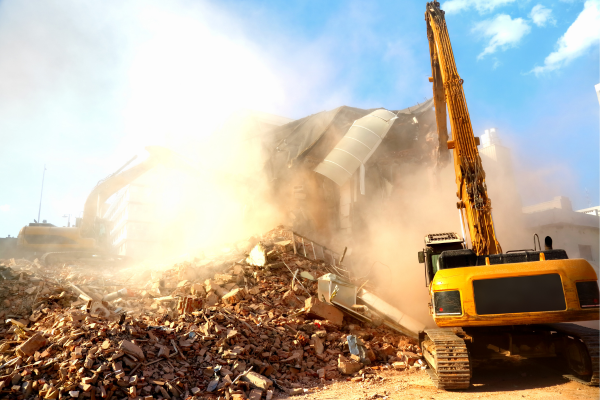
In a firm move against unauthorised construction, the Bombay High Court has directed the demolition of an illegal structure in Ulhasnagar, Thane district, warning that failure to enforce planning regulations could lead to anarchy. A division bench of the court criticised the inaction of civic authorities and called on the state government to enact laws holding all parties involved in such violations strictly accountable. The ruling came in response to a petition filed by a local resident, who alleged political interference had stalled enforcement action.
The Bombay High Court has overturned a July 2023 order by MHADA that had declared the Shoorji Vallabhdas Chawl in Worli as "dangerous" under Section 79-A, observing that a building cannot be deemed dangerous merely because it is old. A two-week stay was granted on the judgement as tenants and MHADA plan to approach the Supreme Court. The case highlighted a prolonged dispute between the landlord and tenants over redevelopment.

Advertisement