Advertisement






Over the past four years, New Zealand's housing market has experienced significant price fluctuations. Currently, the market is quiet due to high interest rates, making it difficult for many potential buyers. Banks face competition to attract a limited number of creditworthy borrowers. Despite some easing in monetary policy, economic uncertainty has kept borrowing cautious, with low lending growth over the past year. Residential property holds a large share of household wealth, affecting financial stability and economic growth. The government is introducing policy changes to improve housing supply and affordability, while new debt-to-income limits aim to manage demand and reduce risks.Read more

Yuzhou Group, a Shanghai-based property developer, plans to raise approximately HKS 12.01 billion (USD 1.54 billion) through the issuance of 5.65 billion existing shares at HKS 2.127 per share, as part of its restructuring efforts for offshore debts. This move follows a tumultuous year marked by defaults on dollar bond payments amidst China's real estate downturn. In response to the sector's challenges, the Chinese government is introducing incentives to revitalise housing projects. Yuzhou also proposes a share consolidation plan to enhance its stock value, reflecting a broader trend of financial distress among Chinese developers navigating debt issues.Read more

Australia's housing market is cooling, particularly in Sydney and Melbourne, where home prices declined by 0.1% and 0.26% in October, respectively, according to CoreLogic data. National prices increased by 0.3%, driven by growth in more affordable regions like Perth and Adelaide. Factors such as rising housing listings, cautious buyer behavior, and persistent high-interest rates-currently at 4.35%-are contributing to this trend. While some analysts anticipate potential interest rate cuts by early 2025, others urge caution in borrowing practices. The shifting landscape underscores the need for buyers to navigate affordability amid evolving market conditions.Read more

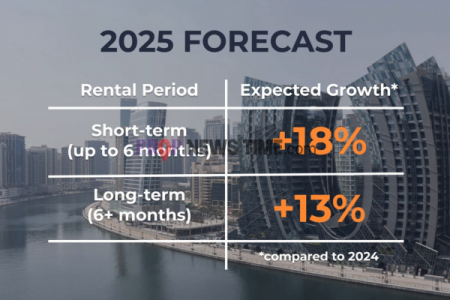
In the first half of 2024, Dubai's rental prices increased by an average of 13.5%, with growth expected to reach 20% by year-end. This upward trend is anticipated to continue into 2025, with forecasts indicating an 18% rise in short-term rentals and a 13% increase for long-term rentals. The real estate market is poised for organic growth, driven by rising property values, new developments, and a projected 6.2% national GDP increase in 2025. Increased housing supply, expected to add 182,000 units by 2026, aims to meet rising demand. A growing expatriate population is also pushing rental costs upward.Read more
The British government plans to increase the stamp duty tax on second home purchases by 2 percentage points to 56%, announced by Finance Minister Rachel Reeves. This measure aims to generate revenue for supporting first-time homebuyers and facilitate over 130,000 transactions in the next five years. However, the decision not to extend the existing homebuyer discount raises concerns about housing accessibility. With ambitious targets to construct 370,000 new homes annually, the government must balance tax revenue needs with affordability challenges as rising interest rates and property prices create financial hurdles for potential buyers.Read more

Advertisement


Sino-Ocean Group, a major Chinese property developer, has unveiled plans to issue new zero-coupon mandatory convertible bonds and interest-bearing perpetual securities totaling approximately USD 4.02 billion. This initiative follows a winding-up petition filed against the company by The Bank of New York Mellon in Hong Kong. As part of a broader strategy to address its mounting debts, Sino-Ocean also seeks to secure an additional USD 2.2 billion in loans. The company's actions reflect the wider challenges within the Chinese property sector, marked by a series of defaults since the market's collapse in mid-2021.Read more

Geberit, the Swiss plumbing materials supplier, reported a 3.1% increase in net sales to 2.4 billion Swiss francs (USD 2.77 billion) for the first nine months of 2024, despite a challenging European construction sector. Shares rose 6.47%, reflecting confidence in the company's performance, primarily driven by its renovations business, which accounts for 60% of sales. Analysts highlight Geberit's resilience amid broader market pressures, projecting modest growth of 1% to 2% in net sales for 2024. The company emphasises its adaptability to shifting customer demands and the importance of renovation projects in navigating ongoing economic challenges in Europe.Read more

Sydney's housing market continues to break records, with the latest Domain data showing median house prices reaching USD 1,655,000 in the September quarter, marking a seventh consecutive quarterly gain. Unit prices also climbed, hitting USD 815,300. Sydney's home prices now outstrip Canberra's, Australia's second-most expensive city, by over USD 573,400. A recent CBA analysis shows housing affordability in Sydney is at its lowest on record, and PropTrack identifies New South Wales as the least affordable state in Australia. Rising rents add further strain, with median house rents up 49% since 2019. These affordability pressures are expected to persist with Sydney's projected population growth.Read more

Hongkong Land Holdings, headquartered in Singapore, is winding down its build-to-sell division to focus exclusively on investment properties in key Asian markets. The company expects to generate approximately USD 6 billion from this divestment, which will be reinvested into its flagship mixed-use projects in Hong Kong, Singapore, and Shanghai. Aiming for a twofold increase in underlying profit by 2035, Hongkong Land plans to diversify its geographical presence and limit reliance on any single city for profit. Additionally, it intends to recycle up to USD 10 billion in capital to fuel further growth and optimization.Read more

The British housing market showed unexpected resilience in October, with house prices rising by 0.196%, a slowdown from September's 0.6% increase. Year-on-year, prices grew by 2.4%, though below expectations. Nationwide's chief economist, Robert Gardner, noted that declining borrowing costs could boost market activity. Anticipated interest rate cuts and an impending end to a temporary tax incentive for homebuyers in March 2025 may further stimulate demand. However, fluctuations in activity are expected to be moderate. The ongoing shortage of housing supply remains a critical challenge, underscoring the need for continued government efforts to enhance market stability.Read more

Advertisement