Advertisement






Schloss Bangalore Ltd plans to raise INR 5,000 crore through an initial public offering (IPO), which would be the largest in India's hospitality sector to date. The IPO will include a fresh issue of equity shares worth INR 3,000 crore and an offer for sale (OFS) of INR 2,000 crore by its promoter, Project Ballet Bangalore Holdings (DIFC) Pvt Ltd. Backed by Brookfield Asset Management, the company has filed the necessary documents with SEBI. Funds raised will be used to pay off loans and support general corporate purposes, reflecting strong growth in the hospitality market.Read more

OYO, the Indian travel tech platform, has agreed to acquire the Motel 6 and Studio 6 brands from Blackstone Real Estate for USD 525 million. This all-cash deal aims to expand OYO's presence in the US market as it prepares for its IPO. The acquisition includes G6 Hospitality, which manages nearly 1,500 hotels across the US and Canada. OYO plans to leverage its technology and marketing expertise to strengthen these iconic budget hotel chains while operating them as a separate entity. The transaction, expected to close in Q4 2024, marks a significant milestone for OYO's international growth and a successful exit for Blackstone, which more than tripled investors' capital during its ownership.Read more

India's retail sector needs 55 million square feet of premium mall space in the next four years, says a Cushman & Wakefield report. The country's Retail Space Per Capita (RSPC) is much lower than South Asian countries like Indonesia, the Philippines, and Vietnam. Despite increasing consumer demand and more international brands entering the market, the growth of Grade-A malls has been slow. The report suggests that India must boost mall construction by nearly four times the current rate to meet the demand and match Indonesia's retail space by 2027.Read more
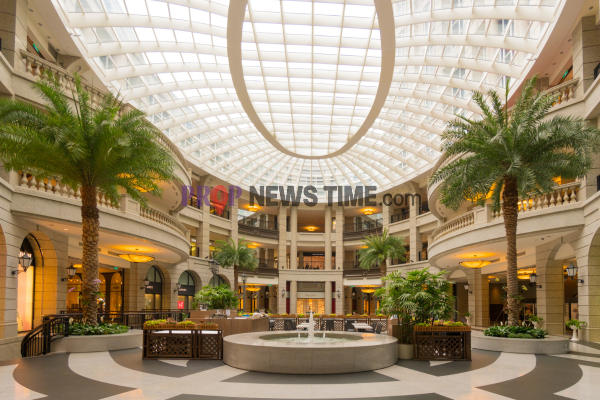
Inorbit Malls (India), a subsidiary of K Raheja Corp, has acquired the Akshay Sky Mall in Hubli, Karnataka, from Suresh Enterprises for over INR 400 crore. Covering nearly 650,000 sq. ft., the fully developed mall will launch soon and is already leased to major tenants like Reliance Trends and PVR. Located on Gokul Main Road, it serves the Hubli-Dharwad area, highlighting the growing significance of tier-2 cities in real estate. Rahul Arora from JLL described the deal as a milestone, reflecting increased interest in high-quality retail spaces. JLL advised on the transaction, overseeing zoning and tenant strategy.Read more
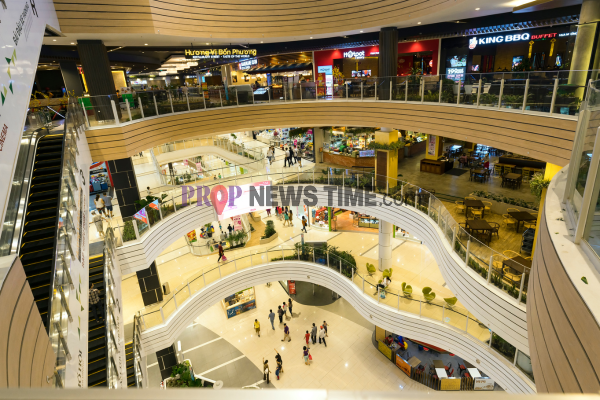
Investors in Asia-Pacific are increasingly favouring student housing, co-living, and serviced apartments, as growth in traditional sectors like offices and logistics slows, according to CBRE. These living sector assets which remain underinvested in the region offer better returns and serve as a hedge against inflation. Multi-family properties have become the top investment choice, surpassing offices and logistics. Global funds are targeting student accommodation in Hong Kong and Australia. With rental rates outpacing inflation and central banks expected to lower borrowing costs, the living sector presents significant opportunities especially in markets like Japan, Hong Kong, South Korea, and Singapore.Read more

Advertisement


In August, Jumboking launched its first burger shop in Bengaluru's HSR Layout, achieving sales figures comparable to its Delhi and Mumbai outlets. Founder Dheeraj Gupta views Bengaluru as a key market due to its status as India's burger capital and its vibrant youth demographic. The South Indian market, including Bengaluru and Hyderabad, is projected to contribute 20% to Jumboking's market share. The company plans to open 150 to 200 stores in Bengaluru over the next decade and expand with 24 new stores in Delhi and Mumbai and 12 in Hyderabad and Bengaluru. With a first-quarter revenue of INR 35 crore, Jumboking aims for INR 40 crore by the third quarter.Read more
India's entertainment sector is seeing rapid growth, driven by the rise of Indoor Amusement Centres (IACs). A report by JLL India reveals that IACs are becoming the key attractions in shopping malls, with over 90 malls hosting multiple centres across 83 cities. Currently, India has 6.6 million square feet of operational IAC space, expected to reach 11 million square feet by 2028, marking a 67% increase. This trend in demand highlights the growing importance of entertainment in retail spaces, with major developments focused in South and North India. Both domestic and international operators are fuelling this growth and expansion.Read more

Ikea plans to introduce smaller stores in India, around 30,000 to 40,000 square feet, to increase accessibility and cater to a broader audience. This move follows successful experiments in other countries and contrasts with its larger store formats in India, such as its 400,000 to 500,000 sq ft outlets. The company is considering Delhi and an existing market (Mumbai, Bengaluru, or Hyderabad) for the initial rollout by 2025. This strategy aims to maintain Ikea's growth momentum, adapting to diverse consumer needs in India's competitive market.Read more
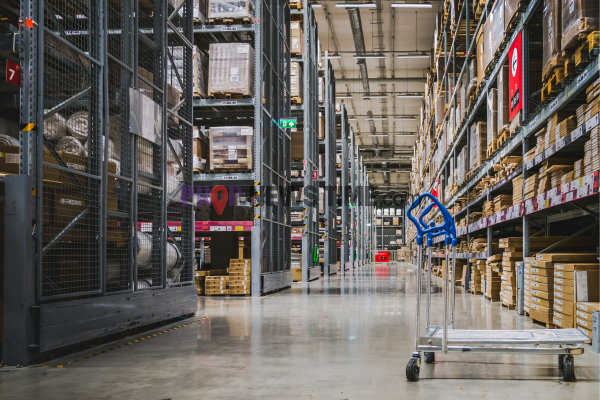
Carrefour is set to re-enter the Indian market after exiting in 2014, partnering with Dubai-based Apparel Group to launch retail stores instead of its previous wholesale model. The retailer will initially focus on North India, starting with a store in the National Capital Region in 2025, with plans for nationwide expansion. Store sizes will range from 8,000 to 30,000 square feet. This move is part of Carrefour's strategy to enter 10 new countries by 2026. It remains unclear if Carrefour will sell only food or a broader range of products.Read more

India's hospitality industry is set to grow at a Compound Annual Growth Rate (CAGR) of 10.5% over the next three years, generating an additional annual demand of INR 8,200 crore, driven by domestic travellers, international tourists, and the MICE segment. Domestic travellers will contribute around 50% to this growth, with foreign tourists and MICE segments accounting for 30% and 20%, respectively. By 2027, the number of hotel rooms is expected to increase to 241,000. Demand is strong across Tier II and III cities, with a 13% annual growth, although room supply in these areas grows slower at 10%. Enhanced connectivity is further boosting this trend.Read more

Advertisement





